Get free quotes from radon testing and mitigation near you
Takes about a minute. Free, no obligation; providers reply to you directly.
The inspector flagged it on a Tuesday afternoon. We were two weeks from closing on a house we’d already mentally moved into, and the radon test came back at 6.8 pCi/L — nearly double the EPA’s action level of 4 pCi/L. I had no idea what that meant, no idea what a mitigation contractor actually did, and approximately zero time to figure it out before the deal fell apart.
What followed was a crash course in a process that nobody explains clearly — not the real estate agent, not the home inspector, and certainly not the dozen contractor websites I visited that all said the same nothing.
So here’s what actually happens, start to finish.
The Short Version:A qualified radon mitigation contractor will assess your home, install an active soil depressurization system (a pipe + fan that vents radon above the roofline), and verify results with post-installation testing — all typically in a single day’s work. The whole process from first call to final test takes 1–3 weeks. The villain is radon above 4 pCi/L. The fix is straightforward. The catch is hiring someone who does it right.
Key Takeaways
- Verify NRPP or AARST certification before you agree to anything — state licensing alone isn’t enough
- Contractors must guarantee reduction below 4 pCi/L and put it in writing
- Post-installation testing is non-negotiable; retest every two years after that
- A fixed-price estimate protects you; walk away from anyone quoting “time and materials”
Step 1: Vet Before You Call (Most People Skip This)
Here’s what most people miss: the radon industry has two separate credential tracks — one for measurement, one for mitigation. You want someone certified specifically for mitigation, either through the National Radon Proficiency Program (NRPP) or AARST (American Association of Radon Scientists and Technologists).
Before you pick up the phone, confirm:
- Current mitigation certification (ask for the credential number — look it up)
- State-required license and proof of liability insurance
- Bonded status
- References from jobs in your region (soil conditions vary; local experience matters)
Nobody tells you this, but a contractor certified only for radon measurement cannot legally perform mitigation in most states. The credentials look similar on a website. They are not interchangeable.
Step 2: The Initial Consultation
A legitimate contractor won’t quote you a price over the phone without seeing your home first. If they do, that’s your first red flag.
The initial assessment should include:
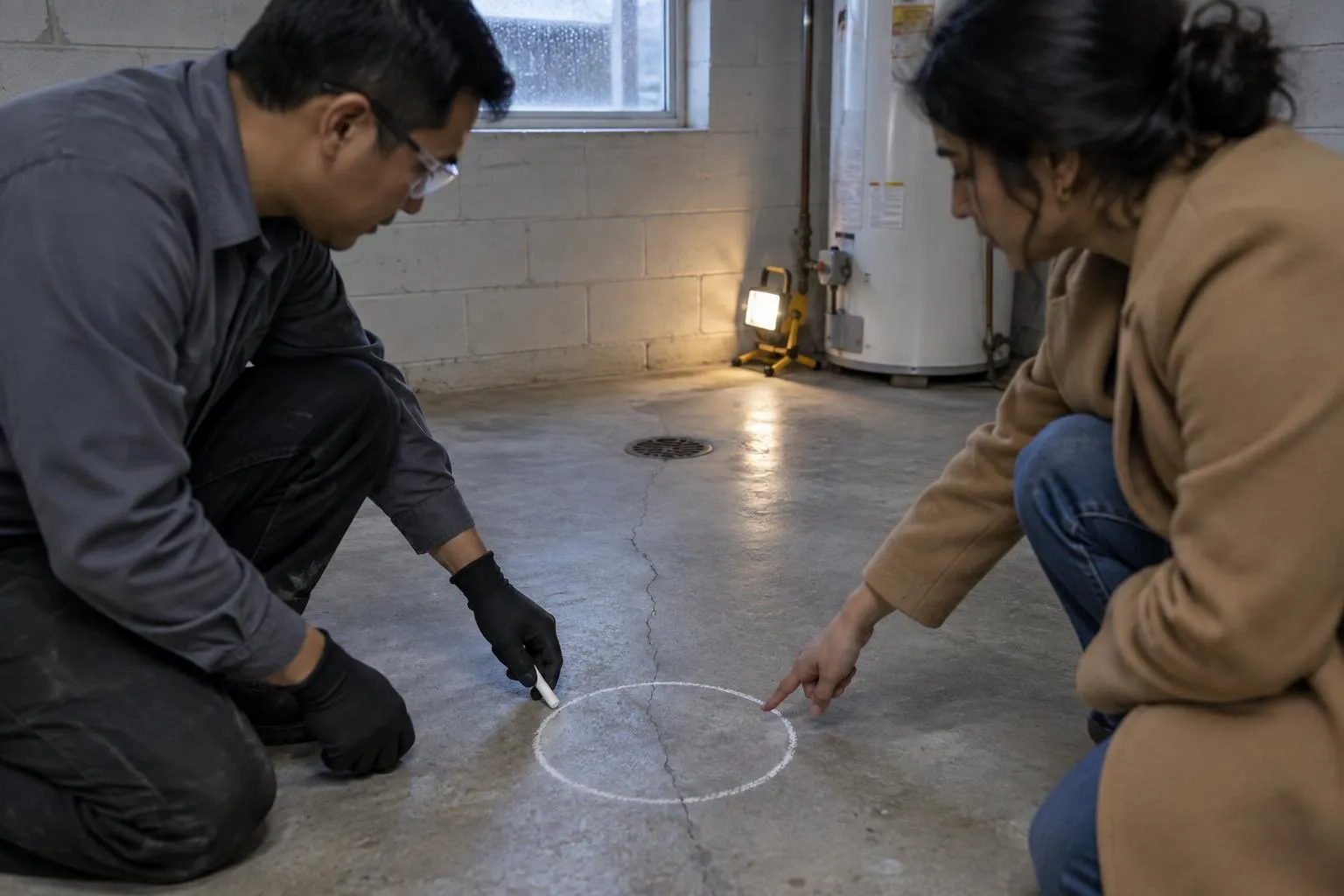
- Foundation inspection — slab, basement, crawl space, and any sub-slab conditions
- Review of prior test results — your existing test data tells them how bad the problem is and helps them size the system
- Diagnostic testing — some contractors include this, others charge separately; ask upfront
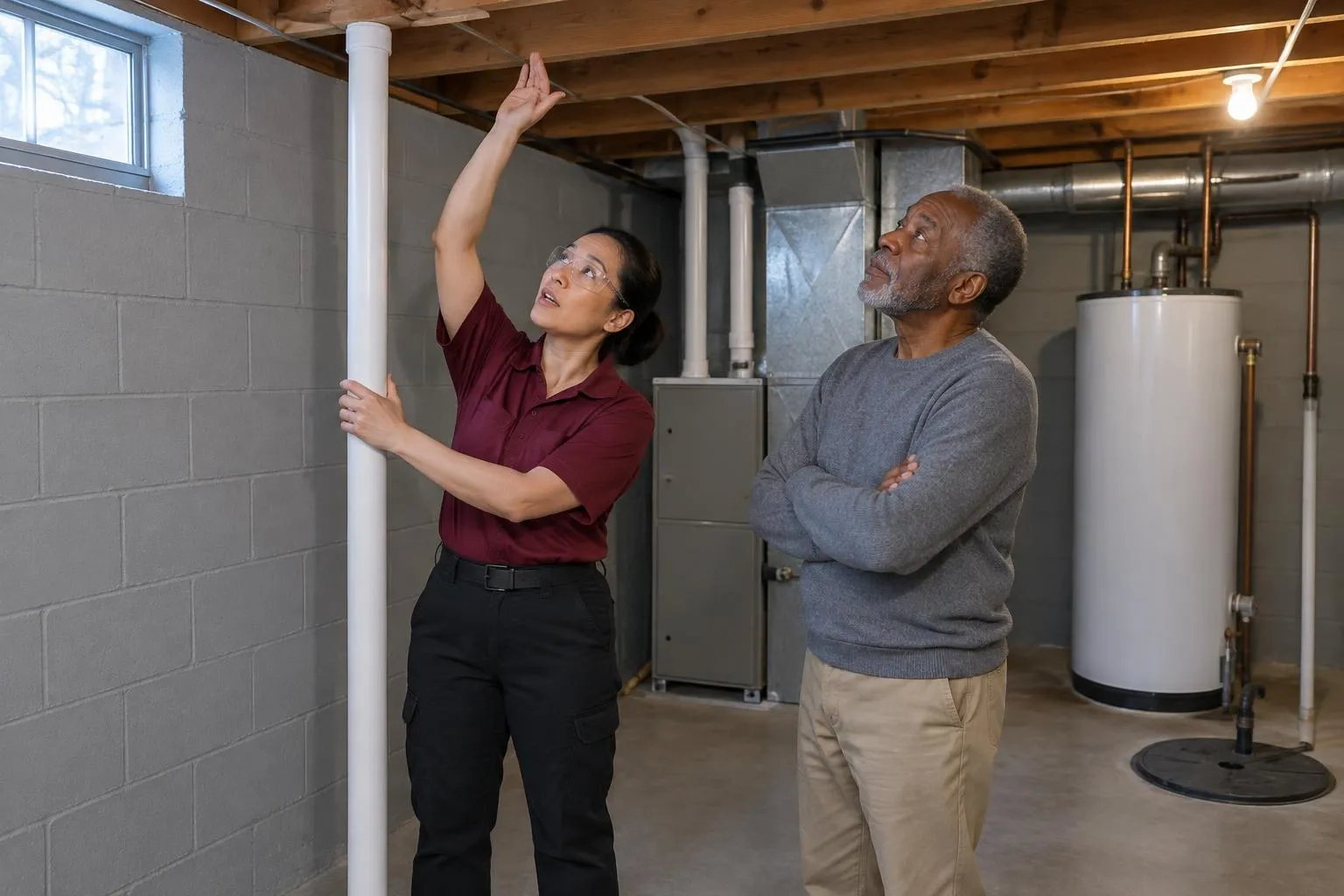
- System walkthrough — they should explain exactly what they’ll install, where the pipe exits, where the fan mounts, and what you’ll need to do (if anything) during installation
Reality Check:If a contractor shows up, glances at your basement for five minutes, and hands you a quote — leave. A proper assessment takes time. Your foundation’s specific layout determines everything about system design.
Step 3: Contract and Pricing
Get everything in writing. The contract should specify:
| Item | What to Require |
|---|---|
| Price structure | Fixed total cost, not hourly |
| Scope of work | Exact components, pipe routing, fan model |
| Performance guarantee | Reduction below 4 pCi/L in writing |
| Warranty | Coverage on fan and components |
| Testing protocol | How many post-install tests and when |
| Timeline | Estimated installation date and duration |
A firm, fixed-cost estimate protects you from scope creep. If something unexpected comes up during installation — a weird slab configuration, unexpected sub-slab material — that’s on them to solve within the quoted price.
Pro Tip:Ask specifically: “What happens if the first system doesn’t get us below 4 pCi/L?” The answer should be “we fix it at no additional charge.” If there’s hesitation, that’s a warranty conversation you need to finish before signing anything.
Step 4: Installation Day
Most residential installs complete in a single day. Here’s the typical sequence:
- Core drilling through the concrete slab into the soil layer below
- PVC pipe installation (Schedule 40 or ABS) running from the sub-slab up through the interior or exterior of the house
- Radon fan installation — creates the vacuum that prevents radon from entering; mounted in-line with the pipe
- Exhaust point verification — the pipe must terminate at least 10 feet above grade and at least 2 feet above (or 10 feet laterally from) any window, door, or ventilation opening
- Electrical hookup — fan wiring must conform to National Electrical Code standards; roof-mounted fans require GFCI receptacles within 6 feet
- Warning device installation — a pressure gauge or alarm that tells you if the system loses suction
You don’t need to be home the entire time, but someone should be available for questions. Clear access to the basement or crawl space before they arrive.
Step 5: Post-Installation Testing
This is where bad contractors disappear and good ones prove themselves.
Testing should happen multiple times after installation, with specific protocols documented in your contract. Don’t accept “we’ll do one quick test before we leave” as the full story. Initial short-term tests can vary based on conditions — weather, windows, HVAC state. Multiple data points give you confidence.
After you get the all-clear:
- Retest every two years minimum, even if nothing seems wrong
- Keep a long-term continuous monitor running if you want ongoing peace of mind
- A sudden spike in readings is almost always a fan failure or a new crack in the foundation
Step 6: Ongoing Maintenance (The Part Nobody Mentions Until Year Three)
The system doesn’t run itself forever. Build these into your calendar:
- Annually: Check the fan for unusual sounds or reduced airflow
- After any foundation work: Re-inspect caulking and seals around the slab perimeter
- Every two years: Full radon retest, even if the warning device shows no issues
Radon levels can creep back up if the house settles, new cracks form, or the fan degrades. A spike doesn’t mean the contractor did bad work — it means you need a maintenance call.
Practical Bottom Line
The process is more predictable than it sounds when you’re first staring at a scary test result. A qualified contractor with NRPP or AARST mitigation credentials, a fixed-price contract, and a written performance guarantee below 4 pCi/L is what you’re looking for. The installation itself is usually done in a day. The verification takes a couple of weeks.
Your next three moves:
- Verify certification credentials before the first call — use the NRPP or AARST lookup tools
- Get at least two fixed-price quotes with written performance guarantees
- Confirm post-installation testing is included in the contract, not an add-on
For the full picture of what radon mitigation contractors do and how the industry works, start with the Complete Guide to Radon Mitigation Contractors. If you’re ready to find vetted professionals in your area, browse by location to see credentialed contractors near you.
The fix exists. It works. You just have to hire someone who’ll stand behind it.
Done reading? Get quotes from radon mitigation contractors near you.
Takes about a minute. Free, no obligation; providers reply to you directly.
Popular cities:
Nick built RadonTrust because the radon industry still mixes measurement and mitigation in ways that create conflict of interest — the same pro who tells you your level is high often wants to sell you the fix. This directory surfaces independent, credentialed professionals first.