Get free quotes from radon testing and mitigation near you
Takes about a minute. Free, no obligation; providers reply to you directly.
A colleague texted me last year: “ChatGPT just told me AI will replace radon contractors by 2027. Should I be worried?” He’d been running his mitigation business for eleven years, held NRPP certification for both measurement and mitigation, and had installed over 800 ASD systems. I told him to put the phone down.
Here’s the thing — the AI-will-replace-everyone narrative is catnip for tech journalists and a genuine anxiety trigger for skilled trades people who’ve spent years building real expertise. And it’s mostly wrong. But “mostly wrong” isn’t the same as “nothing is changing,” and that gap is where smart contractors either get ahead or get caught flat-footed.
The Short Version:AI will not replace licensed radon mitigation contractors. It will replace the parts of your business that you hate most — missed calls, manual scheduling, endless follow-up — while making high-accuracy risk screening faster for large portfolios. The physical work, the certification, the liability, the judgment calls? Still human. But contractors who ignore AI tools entirely will lose to contractors who use them well.
Key Takeaways
- Machine learning predicts radon risk with 85% accuracy for large portfolios — but that’s risk screening, not mitigation
- AI CRM tools starting at $29.99/month now handle 24/7 call capture and lead qualification
- EC motor integration is cutting fan energy consumption by up to 30% — a real efficiency gain you should know about
- NRPP/NRSB certification, physical installation, and post-mitigation liability remain entirely human domains
What AI Is Actually Good At Here
Let’s be precise, because the hype machine isn’t.
A 2024 Swiss study trained ML models on architectural, geographic, and environmental data and achieved 85% accuracy predicting which buildings exceeded the national radon threshold — without testing a single one individually. UK researchers updated radon-affected area maps using the same approach. PropertECO is already selling this to landlords and local councils: feed us your building portfolio, we’ll tell you which ones to prioritize.
That’s genuinely impressive. And it matters for property managers running 500-unit apartment portfolios or municipalities doing regional risk planning. It does not matter for the homeowner who just got a 6.2 pCi/L reading back from their short-term canister test and needs a contractor Tuesday.
Reality Check:AI prediction models work at population scale. They tell you the odds that a building like yours has elevated radon. They don’t replace an actual test, and they certainly don’t install anything. A 85% accurate model means 15% of buildings get the wrong call — acceptable for policy planning, not acceptable for your client’s family.
The other genuine AI win: business operations. Tools like QuoteIQ (starting at $29.99/month) now offer AI voice agents that answer your phone at 2 AM when a panicked home buyer calls after their inspection report comes back hot. The agent qualifies the lead, captures the address, confirms whether it’s a new installation or re-test, and drops it into your CRM. You wake up to a qualified job waiting in your queue instead of a voicemail you’ll forget to return.
That’s not replacing you. That’s replacing the version of you who was too busy crawling under a crawlspace to answer calls.
| Task | AI Handles Well | Still Requires Humans |
|---|---|---|
| Lead qualification & call capture | ✓ 24/7 AI voice agents | |
| Portfolio-scale risk screening | ✓ 85% ML accuracy | |
| Scheduling & job costing | ✓ CRM automation | |
| Radon measurement | ✓ NRPP-certified measurement | |
| System design for slab vs. crawlspace | ✓ Site-specific judgment | |
| ASD installation & sealing | ✓ Physical, licensed work | |
| Post-mitigation verification testing | ✓ Certified, documented | |
| Fan sizing & sub-slab diagnostics | ✓ Experience + diagnostics | |
| Warranty + liability | ✓ Contractor on the hook |
The Part Nobody Talks About: EC Motors
While everyone’s debating AI replacement, a quieter technology shift is already inside your equipment.
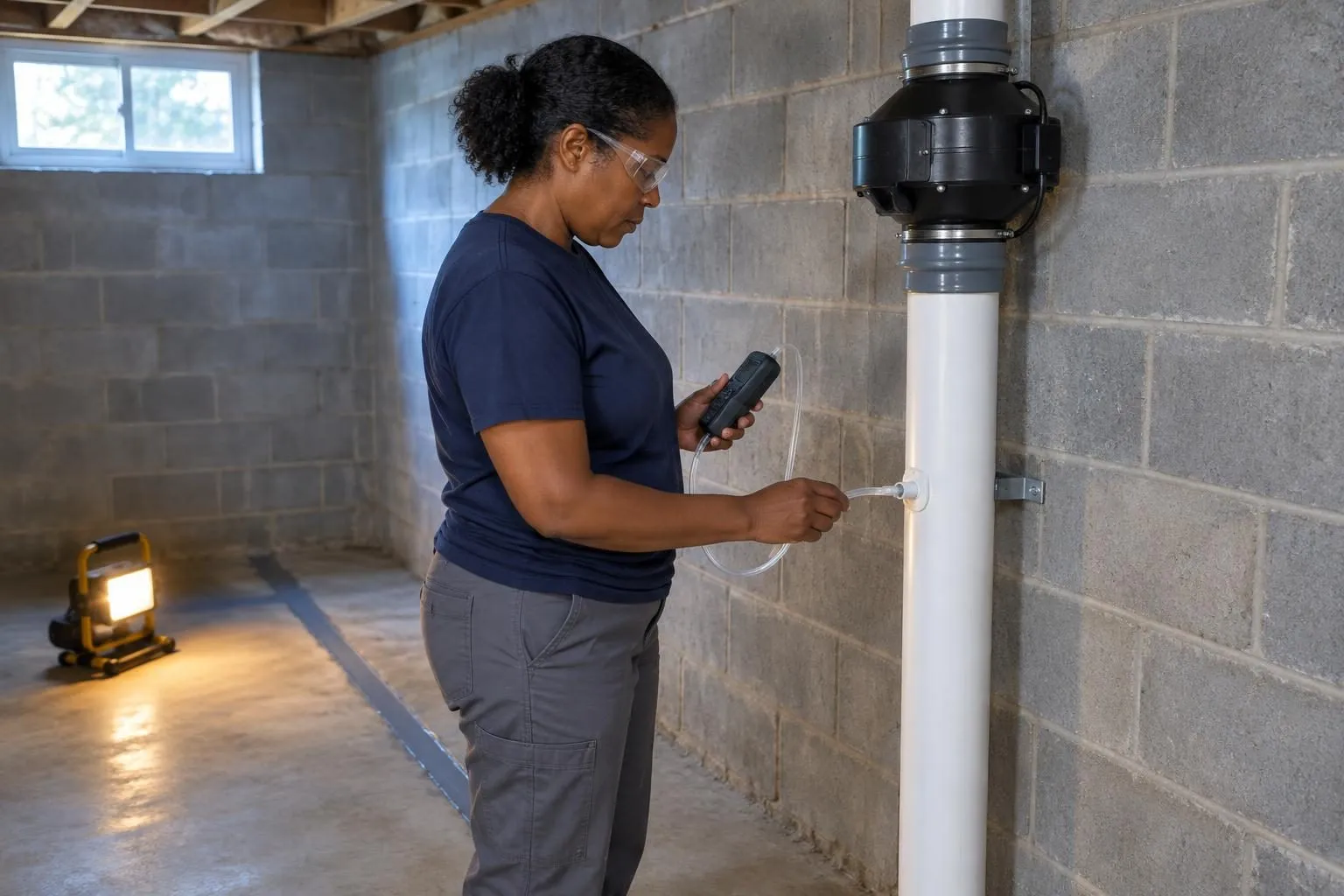
EC (electronically commutated) motors in mitigation fans dynamically adjust speed based on actual system pressure rather than running flat-out 24/7. Engineers at ebm-papst — a major HVAC component manufacturer — have documented up to 30% energy consumption reduction from this switch. Quieter operation, longer lifespan, and lower client utility bills as a selling point.
Nobody tells you this is part of the “AI in radon” story, but it is: smarter control systems fed by sensor data are optimizing the fans themselves. This isn’t replacement — it’s a better tool in your hands.
Pro Tip:When quoting new installations in 2025-2026, ask your supplier specifically about EC motor fan options. The energy savings argument lands well with sustainability-minded homeowners and multi-unit property managers watching utility costs.
What AI Cannot Do (And Won’t For a Long Time)
Here’s what most people miss when they extrapolate from “AI predicted radon levels” to “AI replaces contractors.”
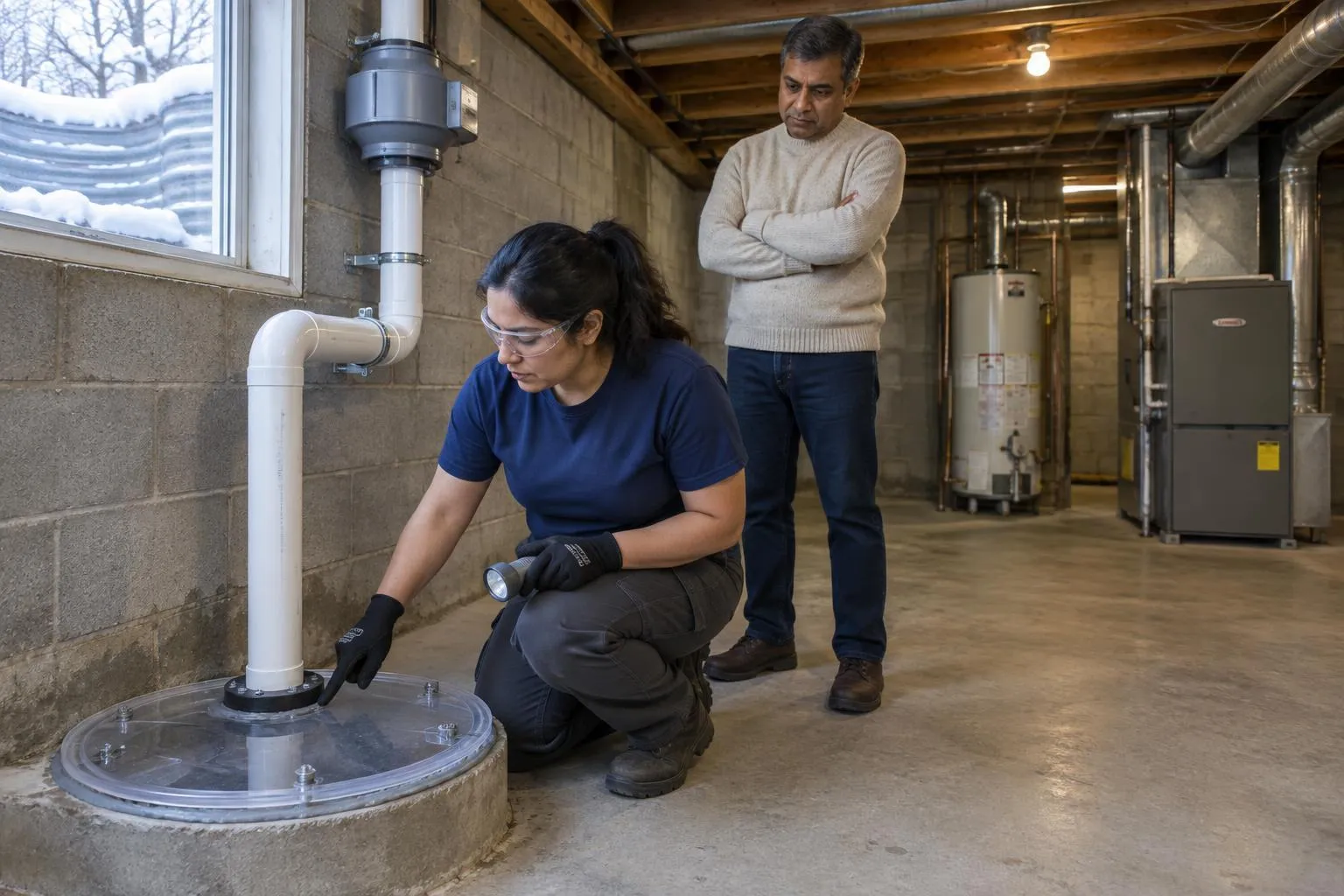
Radon mitigation requires physical access to the sub-slab environment, concrete drilling, PVC routing decisions that depend on what you actually find when you open up the structure, sealing penetrations to code, and then verifying the system worked with post-mitigation testing. A model predicting radon probability from satellite data cannot tell you that this particular 1960s slab has an unusual gravel bed depth that changes your fan sizing calculation. That’s the judgment that comes from a thousand installs.
The liability structure also doesn’t change. The contractor’s name is on the warranty, the permit, and the test report. When a client re-tests at 3.8 pCi/L six months later and wants answers, they’re calling you — not a software platform.
Certification exists for this reason. NRPP and NRSB credentials aren’t bureaucratic gatekeeping — they’re the industry’s acknowledgment that this work affects people’s lung cancer risk and requires documented, accountable expertise.
Practical Bottom Line
The honest answer to the replacement question: AI is coming for your admin stack, not your license.
If you want to compete in the next three years:
-
Audit your lead capture. If you’re missing calls while on jobs, an AI voice agent at $29.99/month pays for itself the first missed call it catches. Look at QuoteIQ or similar radon-specific CRM options.
-
Ask your supplier about EC motor fans. The 30% efficiency argument is real and it’s a selling point to property managers.
-
Position for large-portfolio work. Property management companies and municipalities are starting to use ML screening tools — the contractors they’ll call to actually do the mitigation work are the ones already in their market. Get visible in those conversations now.
-
Don’t panic about prediction models. AI screening tells buyers which buildings might need testing. It generates demand for certified professionals, not less of it.
The contractors who are going to struggle aren’t the ones who ignore AI — they’re the ones who ignore their phone, underprice their work, and don’t have a system for turning inquiries into jobs. Those problems, AI actually can fix.
For a full picture of what the mitigation process involves from the client’s perspective, see The Complete Guide to Radon Mitigation Contractors — it’s useful context for understanding why the physical work component isn’t going anywhere anytime soon.
Done reading? Get quotes from radon mitigation contractors near you.
Takes about a minute. Free, no obligation; providers reply to you directly.
Popular cities:
Nick built RadonTrust because the radon industry still mixes measurement and mitigation in ways that create conflict of interest — the same pro who tells you your level is high often wants to sell you the fix. This directory surfaces independent, credentialed professionals first.