Get free quotes from radon testing and mitigation near you
Takes about a minute. Free, no obligation; providers reply to you directly.
My neighbor called me in a panic after his radon test came back at 11.2 pCi/L — nearly three times the EPA’s action level. He’d already gotten one quote: $2,400 from a company that showed up in a Google ad. Then his brother-in-law in Ohio mentioned he paid $950 for the same type of system two years ago. Same problem, same fix, wildly different number. Was my neighbor getting gouged?
Not exactly. But he was paying the Northeast premium — and he didn’t know it existed.
The Short Version:Radon mitigation costs $748–$1,529 for most homeowners, but where you live can shift that range by 50–100% or more. Urban coasts cost more. High-radon Midwest markets have competitive contractor networks that keep prices honest. Get 3 quotes, verify NRPP/NRSB certification, and never skip post-install testing.
Key Takeaways
- The national average for radon mitigation runs $1,028–$1,071, but Los Angeles averages $2,000 while Kansas City averages $700 — a 186% gap for functionally identical work
- Sub-slab depressurization (the most common system type) costs $500–$2,500; most single-family homes land in the $800–$1,500 band
- Three factors drive state-to-state variation: labor/overhead costs, housing stock complexity, and local contractor competition
- Annual electricity to run the fan adds $150–$500 depending on climate — don’t ignore the ongoing cost
Why the Same Fix Costs Different Amounts
Here’s what most people miss: radon mitigation is not a national commodity with a fixed price. The contractor installs a pipe, a fan, and a pressure gauge. The concept is simple. The cost is local.
Three forces set your actual number.
Labor and overhead. A licensed mitigation tech in San Francisco carries different overhead than one in Columbus. Insurance, wages, warehouse costs — all of it flows into the quote. Metro-heavy states pay more for skilled trades across the board, and radon mitigation is no exception.
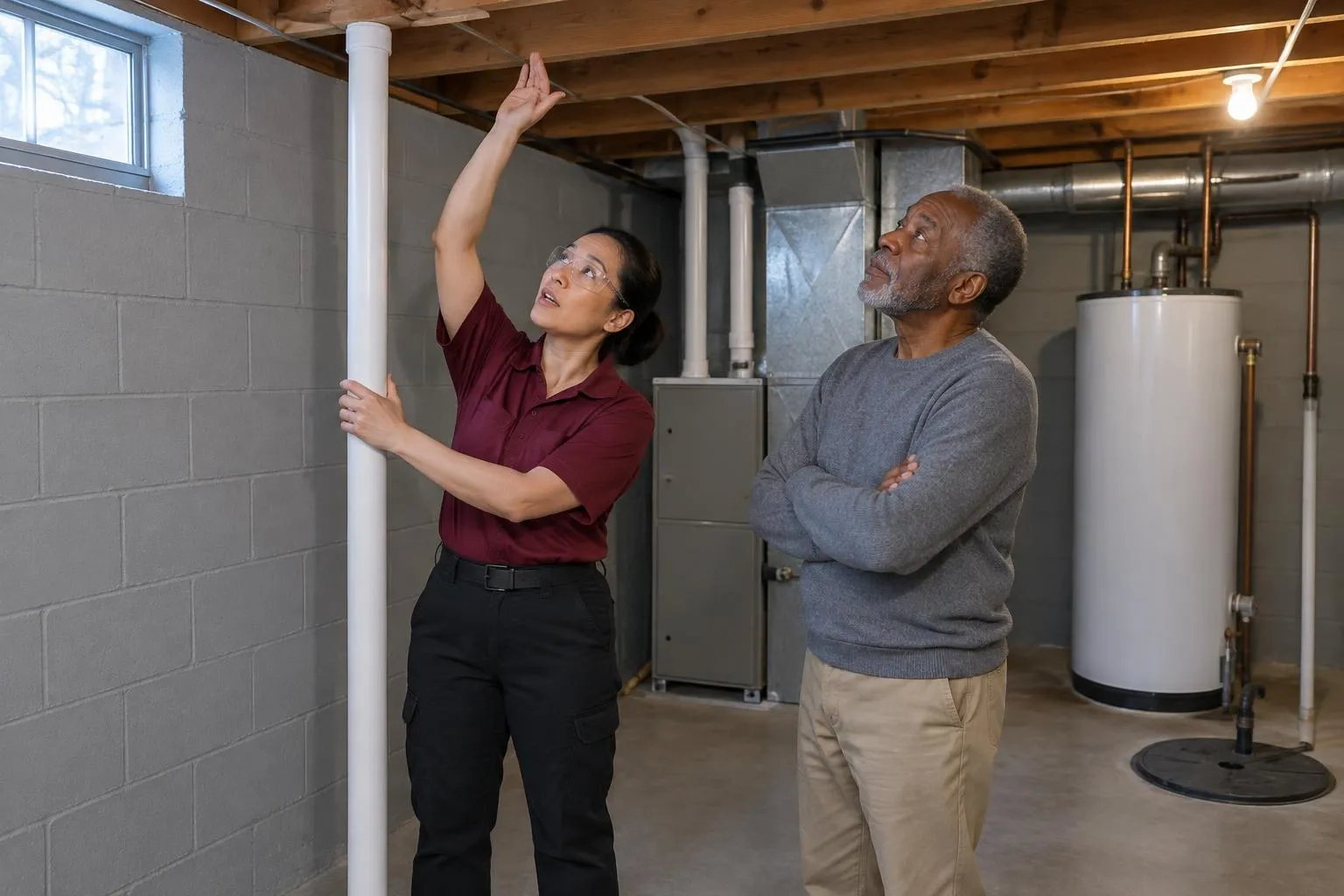
Housing stock complexity. Older homes — think pre-1980 Northeast construction with finished basements, multiple foundation types, and tight crawl spaces — require more prep work, more routing creativity, and occasionally a licensed electrician to run a new circuit. That work adds $500–$1,500 to a job that would be straightforward in a newer ranch-style home with an accessible slab.
Demand and competition. This one cuts both ways. High-radon regions like the Midwest have large, established contractor networks — which creates price competition. But they also face seasonal demand spikes when home sales cluster in spring and fall, and that pressure can push quotes up even in markets with healthy supply.
The Regional Breakdown
| Region / Market | Typical Cost Range | Notes |
|---|---|---|
| Northeast (PA, NJ, NY) | $1,100–$2,600 | Older housing stock, finished basements, higher labor rates |
| Midwest (OH, IN, IL) | $1,000–$2,300 | High radon prevalence, competitive contractor base |
| Mid-Atlantic (VA) | $800–$1,500 | Typical sub-slab systems, moderate complexity |
| Massachusetts (urban) | $1,052–$1,604 | Fan-based systems, 4-bedroom homes |
| Kansas City | $500–$1,500 | Median ~$750; one of the most competitive markets nationally |
| Los Angeles | ~$2,000 | High labor costs, permit requirements drive premium |
| Lower-demand states | $900–$2,200 | Wider variance for complex homes |
Reality Check:That $400–$500 low-end quote you sometimes see online? It’s real — but it almost always means a single-pipe installation on a simple slab with zero electrical work, in a low cost-of-living area. If your home has a crawl space, a finished basement, or sits in a metro market, budget for the middle of the range at minimum.
System Type Affects Your Starting Point
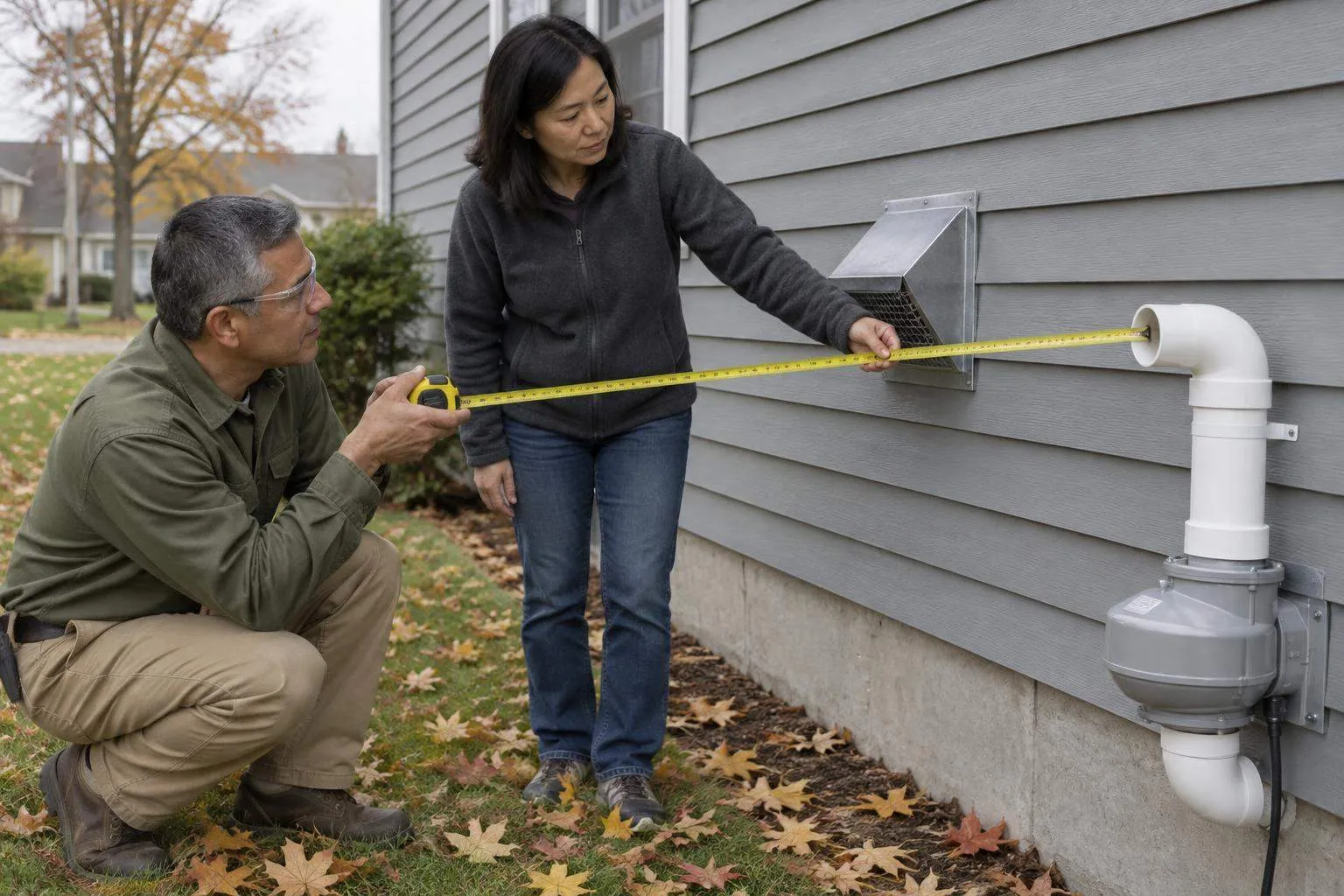
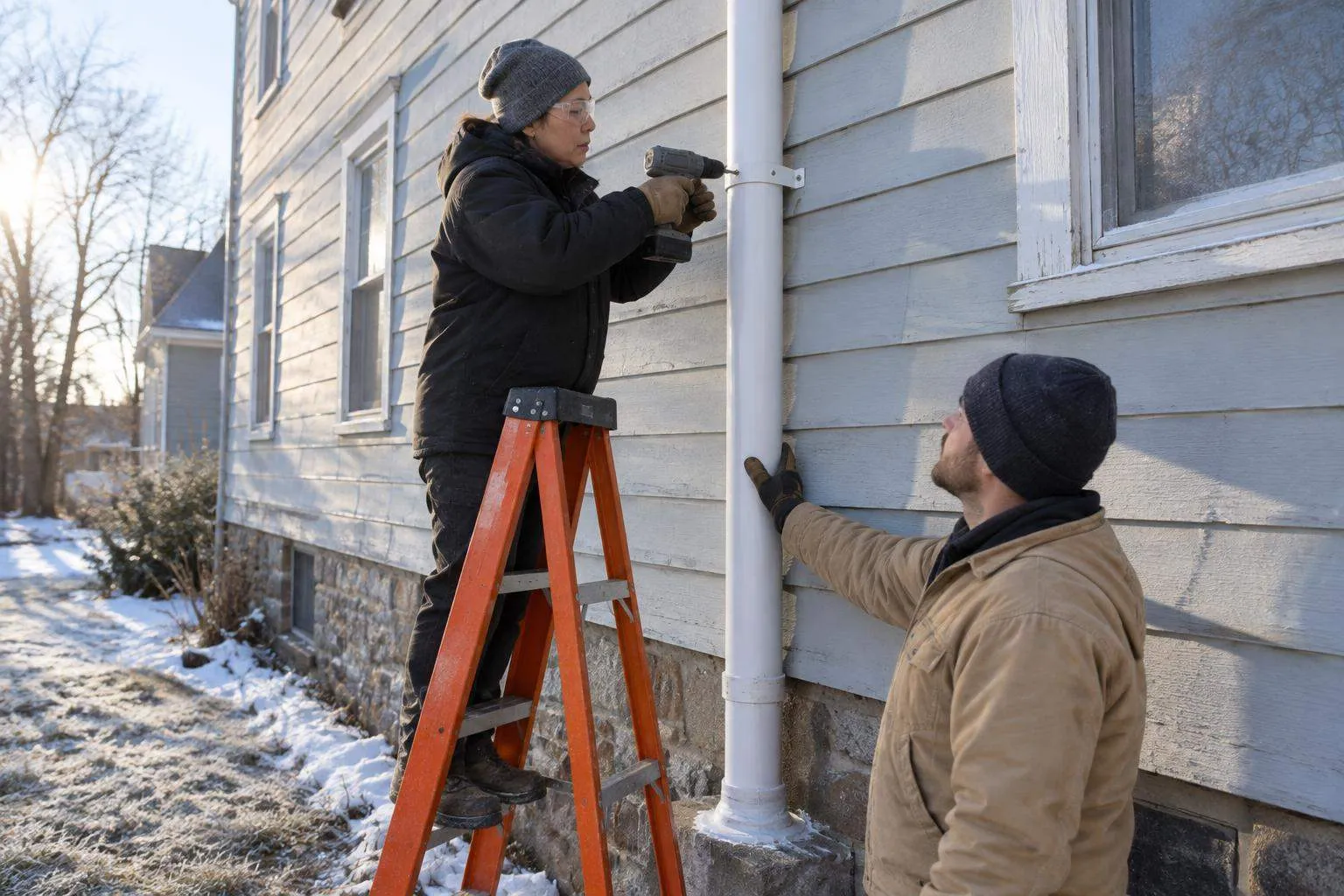
The dominant solution is sub-slab depressurization — a PVC pipe routed through the slab, connected to a fan that continuously vents soil gases above the roofline. For most single-family homes, this runs $800–$1,500 all-in, with labor bundled into the quote.
Active fan-powered systems in that $800–$1,300 range handle the majority of elevated readings. Complex situations — large homes (add $500–$1,500), multiple suction points, permit-heavy jurisdictions ($25–$150 in fees), or electrical upgrades — push totals toward the $2,500–$4,000 ceiling.
Installation takes 4–8 hours. A properly installed system reduces radon 80–99%, typically bringing levels below 2.0 pCi/L against an EPA action threshold of 4.0 pCi/L.
Don’t forget the ongoing cost. Running the fan costs $150–$225 annually in warmer climates, $225–$500 in colder ones where the air exchange creates meaningful heat loss. Budget $12–$30/month.
Pro Tip:If you’re in a lower-demand or lower-cost state but close to a metro area, call contractors outside the city first. A licensed NRPP-certified mitigation specialist 30 miles from the urban center often charges 20–30% less than their city counterparts for identical work — same credentials, same system, lower overhead.
What’s Actually Negotiable
I’ll be honest: the system itself isn’t dramatically negotiable once a contractor scopes the job. The pipe, the fan, the sealant — those costs are what they are. But several things are:
- Timing. Winter and shoulder-season bookings often come in lower when contractor calendars have slack.
- Bundling. If a neighbor needs mitigation too, some contractors will discount back-to-back same-day installs.
- Testing. Some contractors include post-mitigation testing; others charge separately. Ask upfront.
What is not negotiable: certification. Your contractor should hold NRPP (National Radon Proficiency Program) or NRSB credentials — and separate credentials exist for measurement versus mitigation. Ask to see the certificate. A seasoned pro charges more than a newer contractor, and that’s usually worth it for the more complex installations.
Nobody tells you this, but the post-install test matters as much as the install itself. Get the scope in writing before work starts, and verify with an independent test — not just the contractor’s own gauge reading.
Practical Bottom Line
If you’ve got a high test result and a quote in hand, here’s how to use this:
- Benchmark your region. Compare your quote against the regional ranges above. Northeast above $2,600 deserves scrutiny. Kansas City above $1,500 deserves scrutiny. Midwest at $1,100 is probably normal.
- Get 3 quotes minimum. Regional averages only tell you so much — local contractor competition is the real price-setter.
- Verify certification. NRPP or NRSB, mitigation track. Non-negotiable.
- Ask what’s included. Labor, materials, permits, cleanup, and post-install testing should all be explicit line items or explicitly bundled.
- Don’t let urgency force a bad decision. Standard mitigation takes 4–8 hours. A 1–2 week wait for the right contractor is worth it.
For more on what to look for in a radon professional beyond price — credentials, warranties, and red flags to avoid — read the Complete Guide to Radon Mitigation Contractors.
My neighbor ended up getting two more quotes. Paid $1,450 — still Northeast pricing, but $950 less than the Google ad. His post-install test came back at 1.4 pCi/L. The system has been running quietly in his basement ever since.
Done reading? Get quotes from radon mitigation contractors near you.
Takes about a minute. Free, no obligation; providers reply to you directly.
Popular cities:
Nick built RadonTrust because the radon industry still mixes measurement and mitigation in ways that create conflict of interest — the same pro who tells you your level is high often wants to sell you the fix. This directory surfaces independent, credentialed professionals first.