Get free quotes from radon testing and mitigation near you
Takes about a minute. Free, no obligation; providers reply to you directly.
My neighbor Dave paid $750 to have his radon fixed last spring. The contractor came out, drilled a hole in his basement floor, stuck a pipe through the rim joist, bolted on a fan from a big-box store, and was gone in three hours. Dave felt like he’d won. I watched from my driveway and thought: that vent is maybe eight feet off the ground and pointing directly at his HVAC intake.
Turns out, Dave’s post-mitigation test came back at 5.2 pCi/L. Higher than before installation. The contractor had since disconnected his phone number.
The Short Version:Cheap radon mitigation contractors are sometimes fine and occasionally a disaster. The difference isn’t price — it’s certification and whether they pull a post-mitigation test. A $900 job from a certified NRPP contractor beats a $1,400 job from an unlicensed handyman every time. Never pay the final invoice before seeing post-install radon readings.
Key Takeaways
- EPA’s safe threshold is 4 pCi/L; a botched system can leave you above your starting level
- Total 10-year cost of a fan-based system exceeds $7,000 (install + electricity + repairs) — cheap upfront often means expensive long-term
- NRPP or NRSB certification is the single most predictive quality signal; in states like Colorado, unlicensed mitigation is illegal
- Always require a post-mitigation radon test — it’s the only way to know the system actually works
What “Cheap” Actually Buys You
The national install range is $800–$2,500 for slab and basement homes, up to $3,800+ for crawl spaces. When you see quotes below $700, something is being skipped.
Here’s the honest breakdown of what gets cut:
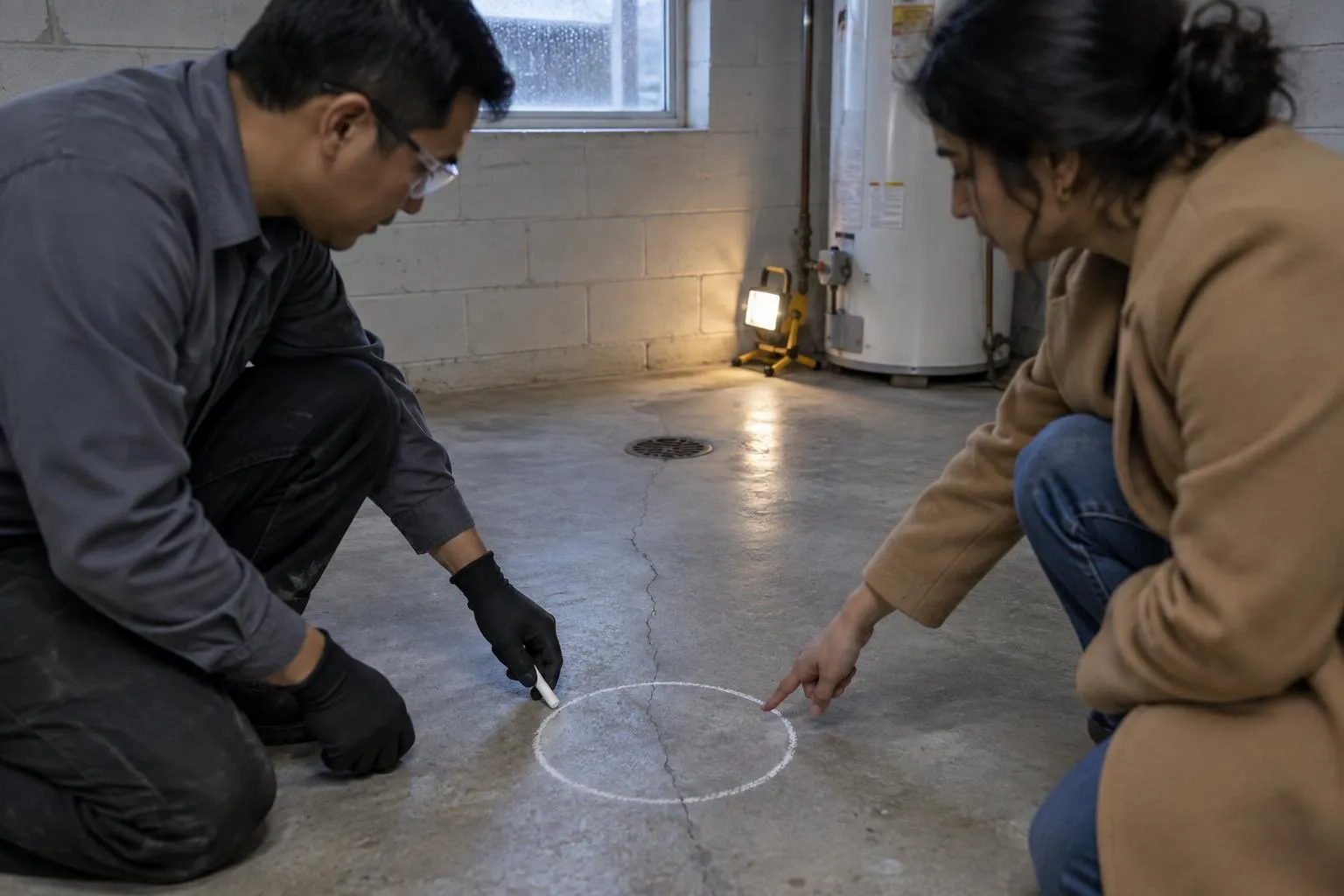
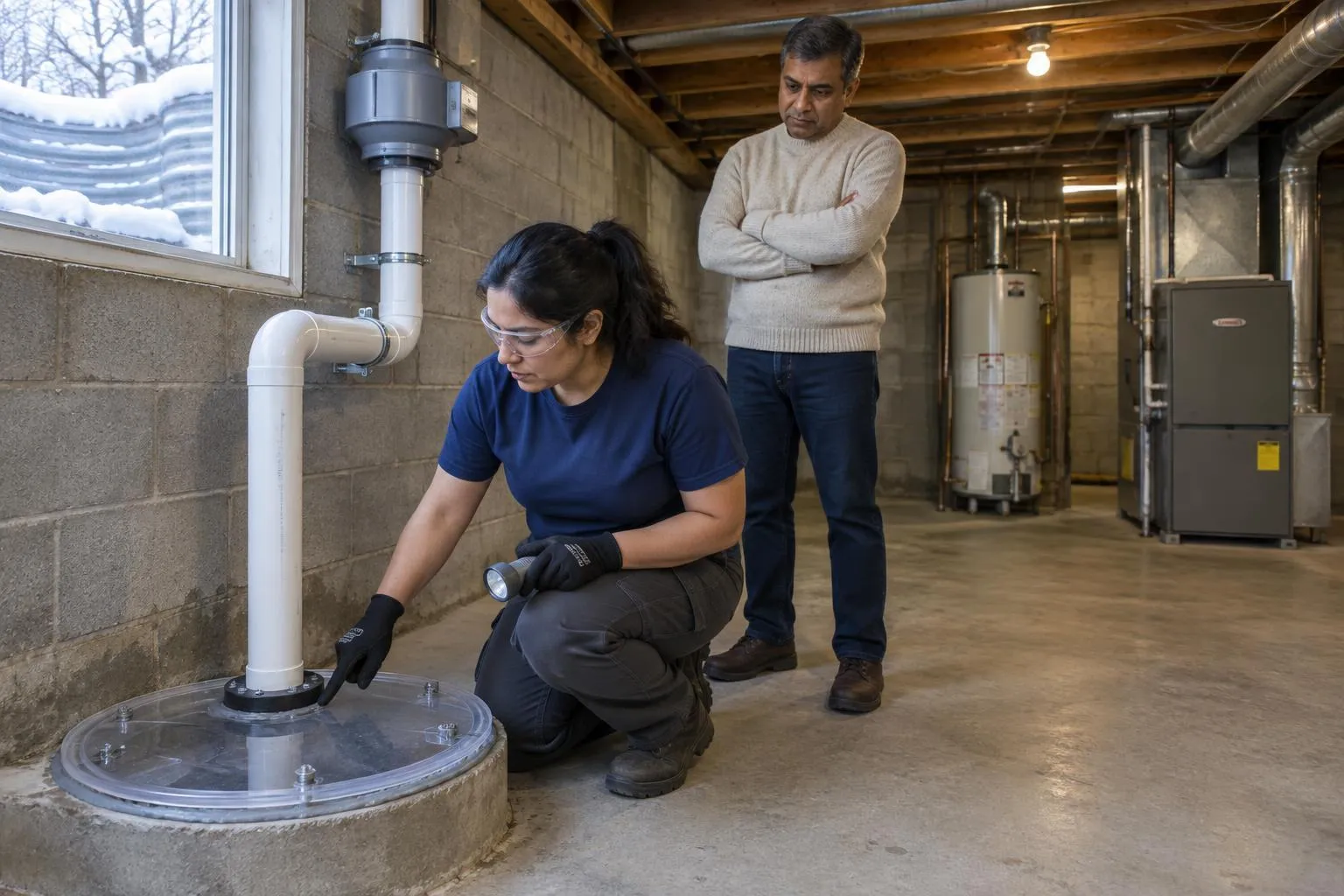
Sealing. Effective sub-slab depressurization depends on sealing cracks, pipe penetrations, and sump lids. Cheap contractors skip this because it takes time and materials. Without it, the fan works overtime and still misses radon entry points.
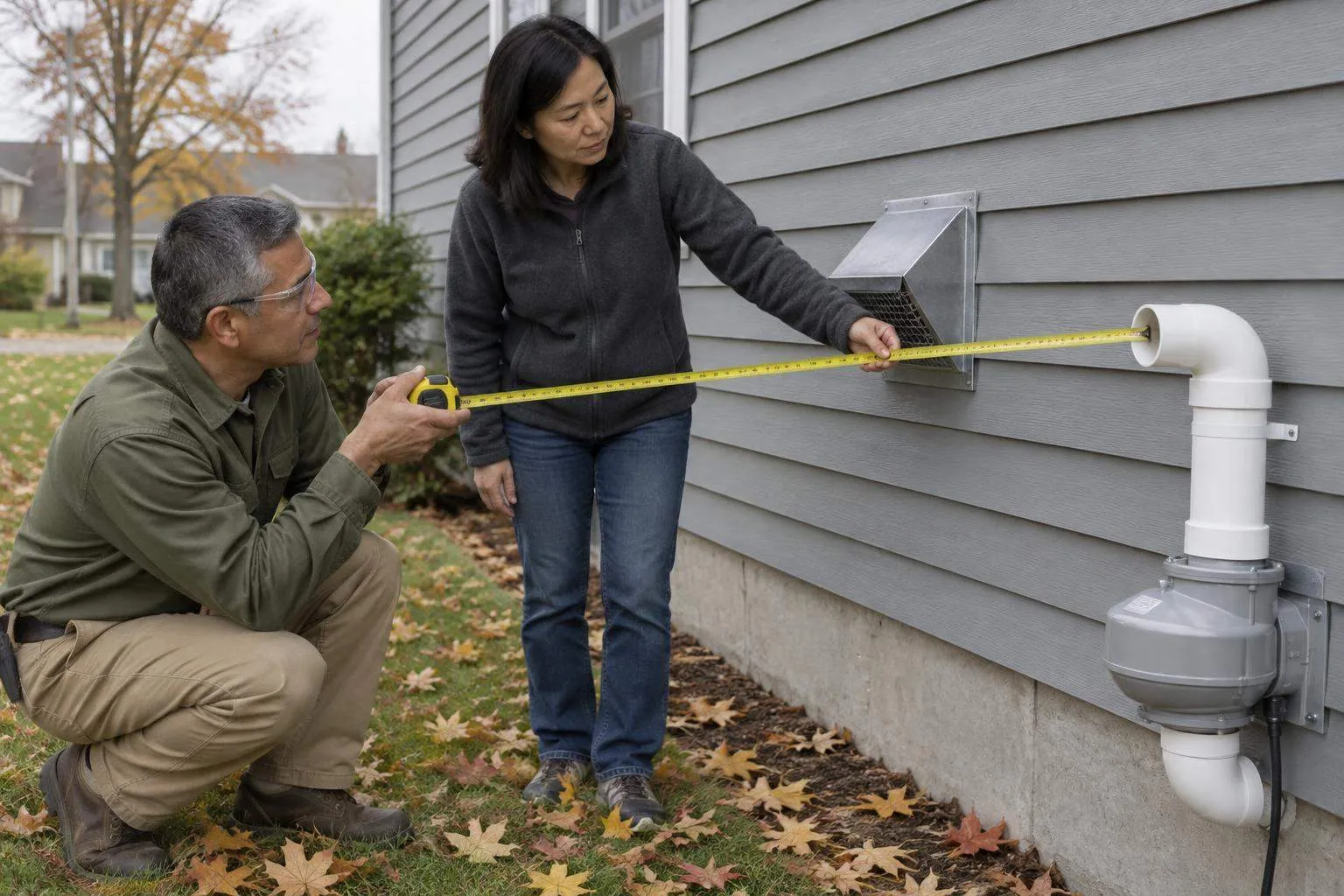
Proper venting height. EPA standards require exterior discharge at least 4 feet above ground and 10 feet from any door, window, or HVAC intake. That last part is what Dave’s contractor ignored. Radon vented near an air intake gets recirculated into the house. Not a minor detail.
A manometer. This is the little U-tube gauge on the pipe that shows the system is maintaining negative pressure. It costs maybe $15. Contractors who don’t install one either don’t know why it matters or don’t want you to know when the system fails.
Post-mitigation testing. This is the one I’ll push hardest on. Some contractors hand you a post-install test kit; others just leave. Without a follow-up test at 24–48 hours after installation, you have zero confirmation the system works. EPA says retest after every mitigation. Non-negotiable.
Reality Check:A system that reduces radon from 12 pCi/L to 5.5 pCi/L is not a successful mitigation. The target is below 4.0 pCi/L — ideally below 2.0 pCi/L. “We installed a fan” is not the deliverable. The reading is.
The Comparison Table Nobody Shows You
| Factor | Unlicensed / Budget ($700–$1,200) | Certified / Quality ($1,500–$4,000) |
|---|---|---|
| Post-mitigation test included | Rarely | Standard practice |
| Proper vent placement | Hit or miss | Code-compliant by default |
| Sealing included | Usually skipped | Included or quoted separately |
| Manometer installed | Often absent | Always present |
| Warranty on workmanship | Verbal at best | Written, 1–5 years typical |
| 10-year total cost | $7,000+ (repairs, inefficiency) | Lower via warranties + efficiency |
| Legal exposure (CO and others) | Potentially illegal | Fully licensed |
The upfront delta looks like $500–$800. The long-term delta is often $2,000–$3,000 when you factor in a re-do job.
Real Things That Go Wrong
Electrical fires. Radon fans run 24/7 for years. An unlicensed installer who splices wiring incorrectly — or runs a fan not rated for continuous duty — creates a genuine fire risk. M.A.R.S. Environmental documents this as one of the primary dangers of DIY and unqualified installs.
Frozen pipes. In cold climates, exterior pipe sections can ice over without interior dampers installed. When that happens, back-pressure can damage the fan or push radon into the house rather than out of it.
Noisy systems. A fan mounted directly against floor joists without vibration isolation turns into a low-frequency hum your family hears for the next decade. This isn’t a safety issue, but it’s a quality-of-life problem that certified contractors solve with $20 of rubber coupling.
Code violations on resale. Improper radon systems get flagged during home inspections. If your system has a vent terminating at the wrong height or lacks a clearly labeled dedicated circuit, it becomes a negotiating chip against you at closing.
Nobody tells you this: a botched mitigation doesn’t just fail to protect you — it can actively complicate your life for years.
When Cheaper IS Fine
I’ll be honest — there’s a real scenario where the lower-priced contractor is the right call.
If you’re getting three quotes from three NRPP-certified contractors and one comes in at $950 versus $1,400, take the $950 quote. Certification is the signal, not price. Labor rates vary by region; urban markets run higher. A certified contractor in a lower cost-of-living area doing a straightforward single-pipe slab job can legitimately charge less.
Pro Tip:Use the EPA’s state radon office directory or the NRPP’s contractor lookup to filter to certified pros in your area before you even ask for quotes. Certification first, then price competition.
The other scenario where budget works: supplementing with sealing before installing a system. Products like RadonSeal applied to concrete floors reduce radon entry points and can meaningfully lower the fan load — which reduces electricity costs and extends fan life. Some homeowners see level reductions of 20–40% from sealing alone, which can push a borderline 4.5 pCi/L reading to a safe level without a full system install. Get tested first ($99 for professional, $15 for a short-term DIY kit) before you buy anything.
The Hidden Operating Costs
The install is only the beginning. Radon fans run at roughly 50 watts continuously — that’s about $50–$80/year in electricity depending on your utility rates. In cold climates, you’re also exhausting conditioned air 24/7, which your heating system has to replace. Over ten years, total system cost (install + electricity + energy loss + fan replacement) exceeds $7,000 for the average home.
A properly installed, sealed, efficient system keeps that number as low as possible. A cheap system with a bath fan (often marketed as a quieter, lower-cost alternative) frequently underperforms its spec ratings and leaves you right back at re-mitigation territory in year three.
Practical Bottom Line
- Test before you hire anyone. Short-term kit from a hardware store runs ~$15. Professional test is ~$99. Know your starting number.
- Filter contractors by NRPP/NRSB certification first, then compare prices. The hub guide has the full checklist for evaluating contractors.
- Get three quotes — all from certified pros. If a quote is significantly below the others, ask specifically what’s being omitted.
- Require a written post-mitigation test as a condition of final payment. Not a kit they hand you — an actual test with documented results.
- Ask about warranties — workmanship (1–5 years is standard) and fan manufacturer warranties (typically 5 years).
- Retest annually or whenever you renovate. Radon levels shift with foundation settling, new cracks, and HVAC changes.
Dave eventually got a certified contractor to reinstall at full cost. He’s at 1.8 pCi/L now. He spent $1,850 total to get to where he should have been for $1,100 the first time.
The cheap option cost him more.
Done reading? Get quotes from radon mitigation contractors near you.
Takes about a minute. Free, no obligation; providers reply to you directly.
Popular cities:
Nick built RadonTrust because the radon industry still mixes measurement and mitigation in ways that create conflict of interest — the same pro who tells you your level is high often wants to sell you the fix. This directory surfaces independent, credentialed professionals first.