Get free quotes from radon testing and mitigation near you
Takes about a minute. Free, no obligation; providers reply to you directly.
The inspector handed me a test result showing 8.3 pCi/L — more than double the EPA action level — and I had no idea what to do next. I called the first contractor I found on Google. He quoted me over the phone in four minutes, said he could start Tuesday, and asked for full payment upfront. I almost said yes.
A friend who’d gone through this talked me down. That contractor, she explained, was hitting every red flag in the book.
Here’s what I know now that I didn’t know then.
The Short Version:Most radon mitigation contractors are legitimate — but the bad ones are hard to spot if you don’t know what to look for. The biggest risks aren’t obvious scams; they’re small omissions that leave you with a system that looks fine but doesn’t actually protect your family. Verify certifications through the national registries, demand a written proposal before any money changes hands, and never pay in full upfront.
Key Takeaways:
- NRPP or NRSB certification isn’t optional — it’s your baseline filter
- A legitimate contractor won’t quote you without seeing the home first
- Post-installation testing is required, not a nice-to-have
- Payment in full before work starts is a cash-grab signal
Red Flag #1: No Certification — or Can’t Prove It
What it looks like: You ask about credentials and get a vague answer. “We’re licensed and insured.” “We’ve been doing this for 20 years.” Nothing specific, nothing verifiable.
Why it matters: Radon mitigation has real national certification bodies — the NRPP (National Radon Proficiency Program) and NRSB (National Radon Safety Board). Some states add their own layer; Pennsylvania requires PA DEP certification. Without these credentials, the person drilling through your foundation and designing a depressurization system has no standardized training behind them. Ineffective systems are the best-case outcome. Backdrafting — where the fan reversal pulls combustion gases from water heaters or furnaces back into living spaces — is the worst.
How to avoid it: Ask for the specific certification and number. Then verify it yourself at the NRPP or NRSB national registries. Takes five minutes. If the contractor isn’t listed, stop the conversation.
Pro Tip:Certifications are split between measurement and mitigation — make sure the contractor you hire holds a mitigation credential specifically, not just a testing cert.
Red Flag #2: No Pre-Quote Site Inspection
What it looks like: A price quoted over the phone or via email before anyone has seen your house.
Why it matters: Radon system design isn’t one-size-fits-all. Foundation type (slab, basement, crawlspace, combination), soil permeability, existing HVAC configuration, and local building codes all affect where the suction point goes, how the pipe routes, and what fan size is appropriate. A contractor who quotes blind is either guessing or cutting corners — and either way, you pay for it when the system underperforms.
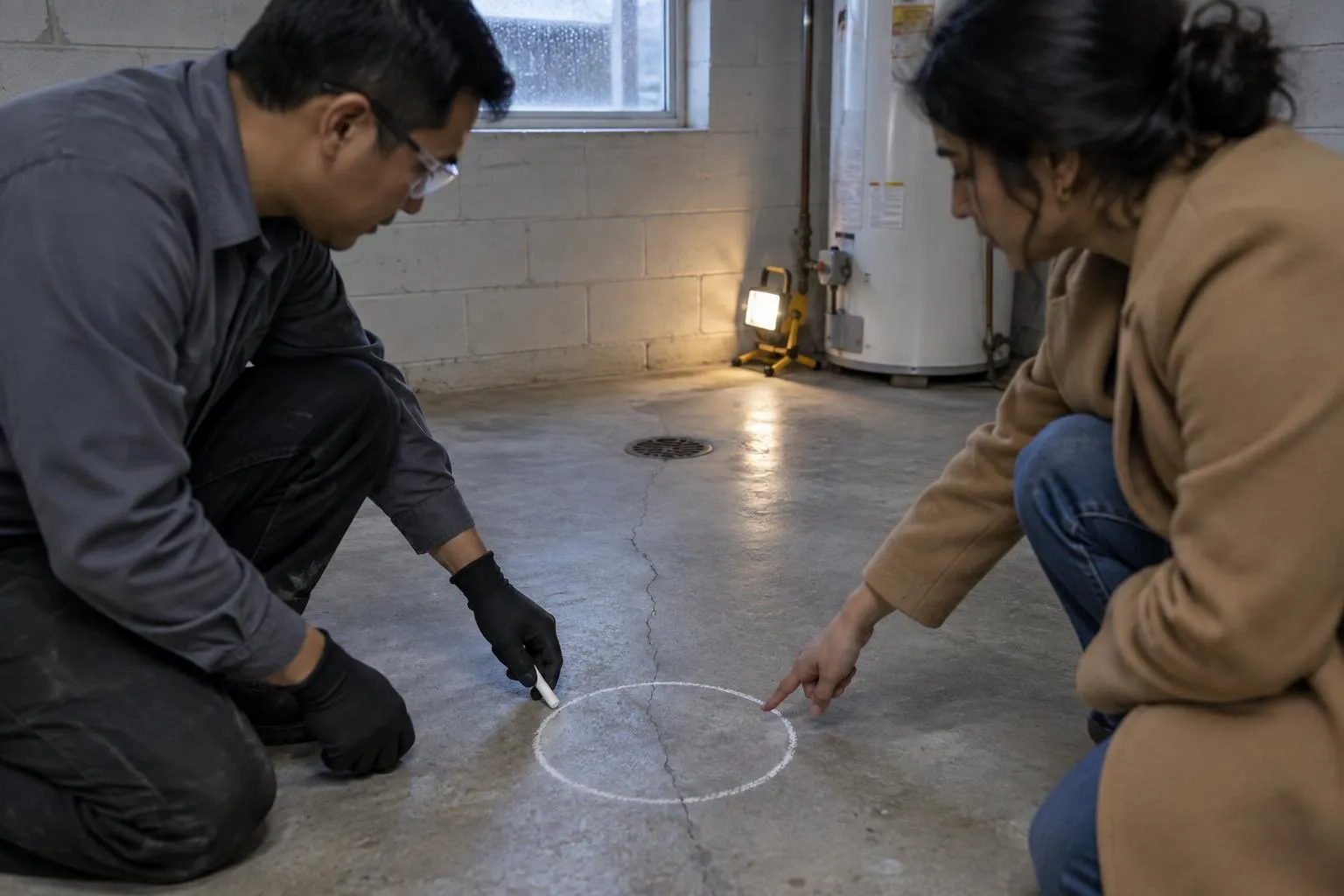
How to avoid it: Require an in-home diagnostic visit before any proposal. The inspection should include pressure field extension testing (measuring how well depressurization communicates across the sub-slab area). If they won’t do it, they’re not the right contractor.
Red Flag #3: No Written Proposal
What it looks like: A verbal quote, a one-line email, or a handshake deal.
Why it matters: A legitimate proposal documents the system design, the specific cost, a payment schedule tied to milestones, and the timeline. Without it, you have no recourse if the installation cuts corners, the price mysteriously climbs, or the work takes three weeks instead of the standard one to two days.
How to avoid it: Before signing anything, confirm the written proposal includes: system design specifications, itemized pricing, payment milestones (not full upfront), projected installation timeline, and post-installation testing procedure.
Reality Check:Mitigation systems typically install in one to two days. You don’t need to vacate your home during installation. If a contractor tells you otherwise, ask why.
Red Flag #4: Demanding Full Payment Upfront
What it looks like: “We require full payment before we start.”
Why it matters: Reputable contractors tie payments to project milestones — a deposit to schedule, a progress payment mid-installation, and a final payment after post-install testing confirms the system is working. Full upfront payment removes their incentive to finish properly.
How to avoid it: Structure payments in stages. If a contractor won’t accept milestone-based payment, walk away. The industry standard exists for a reason.
Red Flag #5: Skipping the Post-Installation Test
What it looks like: The crew finishes, hands you the warranty paperwork, and leaves without testing radon levels.
Why it matters: Post-mitigation testing isn’t optional polish — it’s the only way to know whether the system is actually working. EPA guidelines require retesting no sooner than 24 hours after the fan starts running and within 30 days of installation. If your contractor doesn’t perform or arrange this test, you’re flying blind. The fan could be running and your levels could still be above 4 pCi/L if the system was designed or installed incorrectly.
How to avoid it: Before installation starts, get a written guarantee that specifies the target level (typically <4 pCi/L), the post-install testing protocol, and what remediation looks like if the target isn’t met. Then do your own independent retest — and plan to retest every two years, ideally during heating season when radon levels peak.
| What to Confirm Before Signing | What a Red Flag Looks Like |
|---|---|
| NRPP or NRSB certification number | ”We’re fully licensed” (no specifics) |
| In-home diagnostic before quote | Phone or email quote without a visit |
| Written proposal with milestones | Verbal agreement or one-line email |
| Milestone-based payment schedule | Full payment required upfront |
| Post-install test + written guarantee | ”It’ll work, don’t worry about testing” |
| Exhaust routed ≥10 ft from windows | Exhaust terminating near windows or doors |
Red Flag #6: Poor Exhaust Routing
What it looks like: Pipe terminating near a window, under an eave, or close to where people spend time outdoors.
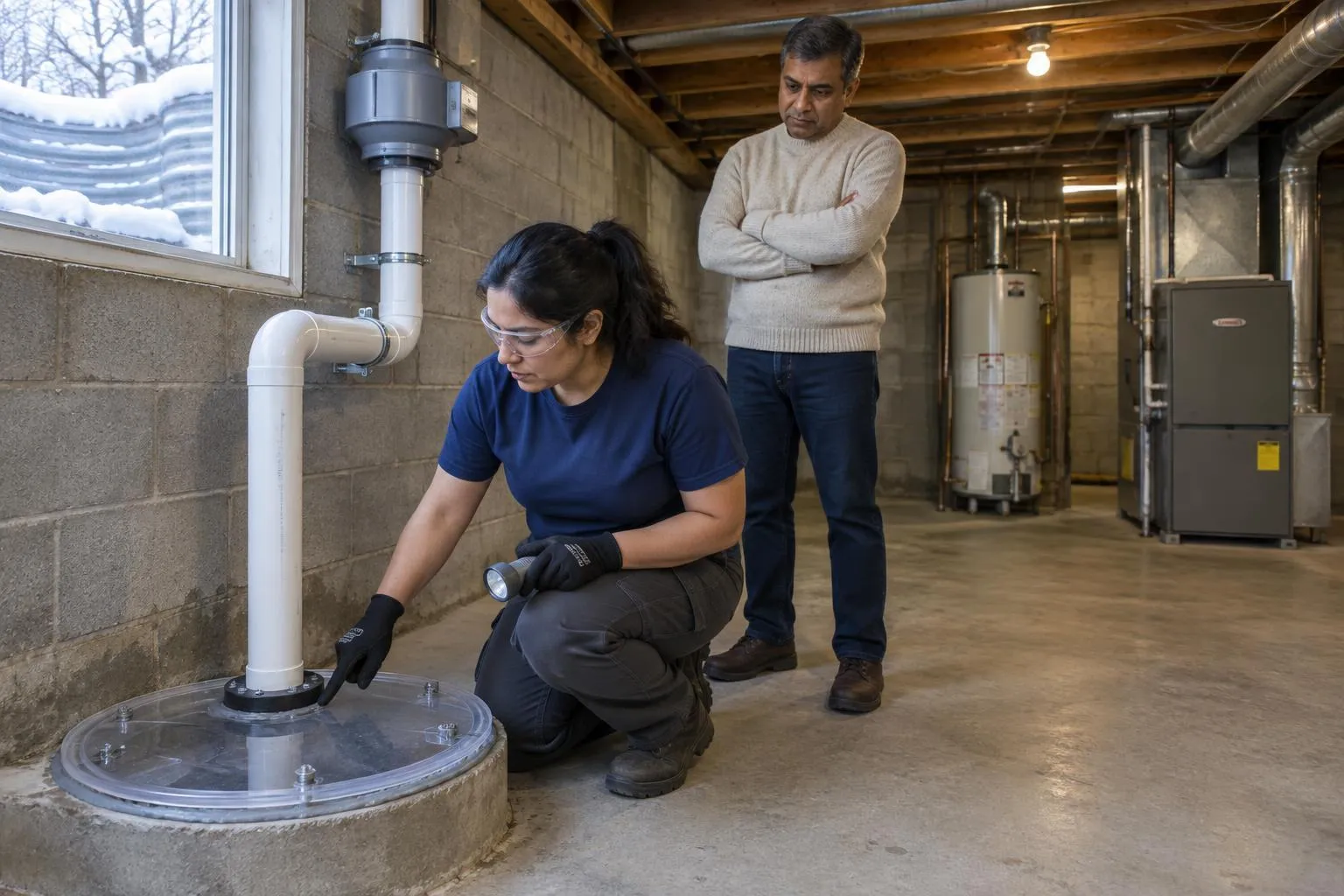
Why it matters: The entire point of active soil depressurization is to vent radon-laden air safely above the roofline, away from re-entry points. EPA and state standards are explicit: exhaust must terminate at least 10 feet above ground level, at least 10 feet horizontally from any window, door, or opening, and above the roof eave. A system that exhausts radon near your HVAC intake or your kids’ bedroom window hasn’t solved the problem — it’s relocated it.
How to avoid it: Walk the installation with the contractor and confirm the exhaust routing before work starts. Ask specifically about the termination point relative to windows and doors.
Pro Tip:Also confirm the system includes a visual or audible fan failure warning device. If the fan stops, you need to know — a silent failure means undetected radon re-accumulation.
Red Flag #7: No Labels, No Permits, No PPE
What it looks like: An unmarked system with no visible labels, a crew that starts immediately without pulling permits, workers with no visible safety equipment.
Why it matters: Labeled systems are code-mandated — the label should identify the system type, warn against tampering, and provide contact information. Permits create a paper trail and typically require inspection, which protects you. A contractor who skips permits isn’t just cutting corners — they’re shifting liability to you. And a crew working without basic PPE around radon, concrete dust, and confined spaces is telling you exactly how seriously they take safety standards.
How to avoid it: Ask before scheduling whether they’ll pull permits for your jurisdiction. Confirm the system will be properly labeled. If the answer to either is unclear, ask why — and take the response seriously.
Practical Bottom Line
You don’t need to be a radon expert to hire a good contractor. You need to ask four questions before any money changes hands:
- What’s your NRPP or NRSB certification number? Verify it at nrpp.info or nrsb.org.
- Will you do a site inspection before quoting? If not, pass.
- What does the written proposal include? Get specifics on design, cost, milestones, and post-install testing.
- What’s your guarantee if we’re still above 4 pCi/L after installation? Get it in writing.
A contractor who bristles at these questions is telling you something important.
For a full walkthrough of what the mitigation process looks like start to finish — including what the system actually does, how long it lasts, and what maintenance looks like — see the Complete Guide to Radon Mitigation Contractors.
Done reading? Get quotes from radon mitigation contractors near you.
Takes about a minute. Free, no obligation; providers reply to you directly.
Popular cities:
Nick built RadonTrust because the radon industry still mixes measurement and mitigation in ways that create conflict of interest — the same pro who tells you your level is high often wants to sell you the fix. This directory surfaces independent, credentialed professionals first.