Get free quotes from radon testing and mitigation near you
Takes about a minute. Free, no obligation; providers reply to you directly.
The inspector handed me the results on a Tuesday afternoon. 14.2 pCi/L — more than three times the EPA action level. I did what most people do: Googled “radon mitigation near me,” clicked the first result, and called. The guy who showed up quoted me $800, couldn’t name his certification body, and wanted cash. I almost wrote the check.
That was the moment I realized I had no idea how to evaluate someone doing work inside my foundation.
The Short Version: Radon mitigation is a semi-licensed trade with real variation in quality. The two credentials that matter are NRPP and NRSB certification. Ask for both proof of certification and proof of insurance before anyone touches your slab.
Key Takeaways:
- There is no single national license for radon contractors — certification from NRPP or NRSB is the closest thing to a standard
- Always verify insurance: general liability and workers’ comp
- Get a written scope of work, written contract, and written performance guarantee before work begins
- Post-installation testing is non-negotiable — a verbal “it worked” means nothing
category: “How-To”
Here are the 15 questions that separate the professionals from the people who watched a YouTube tutorial.
Certification & Licensing
1. Are you certified by NRPP or NRSB?
The EPA discontinued its own National Radon Proficiency Program in 1998, leaving two private organizations to carry the credentialing load: the National Environmental Health Association’s Radon Proficiency Program (NRPP) and the National Radon Safety Board (NRSB). A good answer names one of these specifically and offers to show you the certificate. “I’m licensed” without specifying the body means nothing.
2. Are you licensed in this state — and are individual installers certified, or just the company?
Many states have no radon licensing program at all, but some (like Colorado) do have specific statutes. Call your State Radon Office to find out what’s required locally, then ask the contractor to match it. The installer showing up at your door should hold individual credentials — not just the company owner.
3. Can you provide proof of certification, including your code of ethics agreement?
Certification programs require practitioners to agree to follow technical protocols and a code of ethics. A contractor who’s current on their cert can hand you paperwork on the spot. If they have to “check on that,” that’s your answer.
Insurance
4. Do you carry general liability insurance — and can I see the certificate?
Radon mitigation involves drilling through concrete foundations, running PVC piping through walls, and tapping into your electrical. One slip and you’re looking at structural damage or a liability claim. The certificate should show an active policy with an expiration date in the future.
5. Do you carry workers’ compensation for your employees?
If an uninsured worker is injured on your property, you can be held liable for their medical costs. A reputable contractor carries workers’ comp without exception. One benchmark: a professional operation carries $1,000,000 in combined errors & omissions, general liability, and pollution insurance.
Reality Check:A contractor who gets defensive when you ask for insurance certificates is telling you something important. This is standard practice in every licensed trade — it shouldn’t feel like an unusual ask.
Experience & Expertise
6. How many systems do you install per year?
Volume is a rough proxy for competence. A contractor averaging 2–3 installations per week has seen dozens of foundation configurations, unexpected sub-slab conditions, and post-install surprises. A contractor who does 10 per year is still learning on your dime.
7. Do you have a background in home inspection or general construction?
The best mitigation contractors understand how structures contribute to radon entry — slab construction, crawlspace conditions, pressure differentials. Someone who came up through general construction or home inspection brings structural literacy that a radon-only technician may lack. Ask what their background was before radon.
8. Have you worked on homes with the same foundation type as mine?
A sub-slab depressurization system for a poured concrete slab is a different job than one for a block foundation or a crawlspace. Make sure they’ve done your specific configuration. A “yes” should be followed by specifics — not just an enthusiastic nod.
Scope of Work & Pricing
| What to Ask For | Why It Matters | Red Flag |
|---|---|---|
| Written scope of work | Defines exactly what work will be done | Verbal-only agreement |
| Itemized price estimate | Lets you compare quotes fairly | ”I’ll know when I get there” |
| System diagram | Shows placement of suction point, fan, and discharge | Missing entirely |
| Written contract before start | Protects both parties | ”We can do the paperwork after” |
9. Will you provide a written scope of work and itemized estimate before starting?
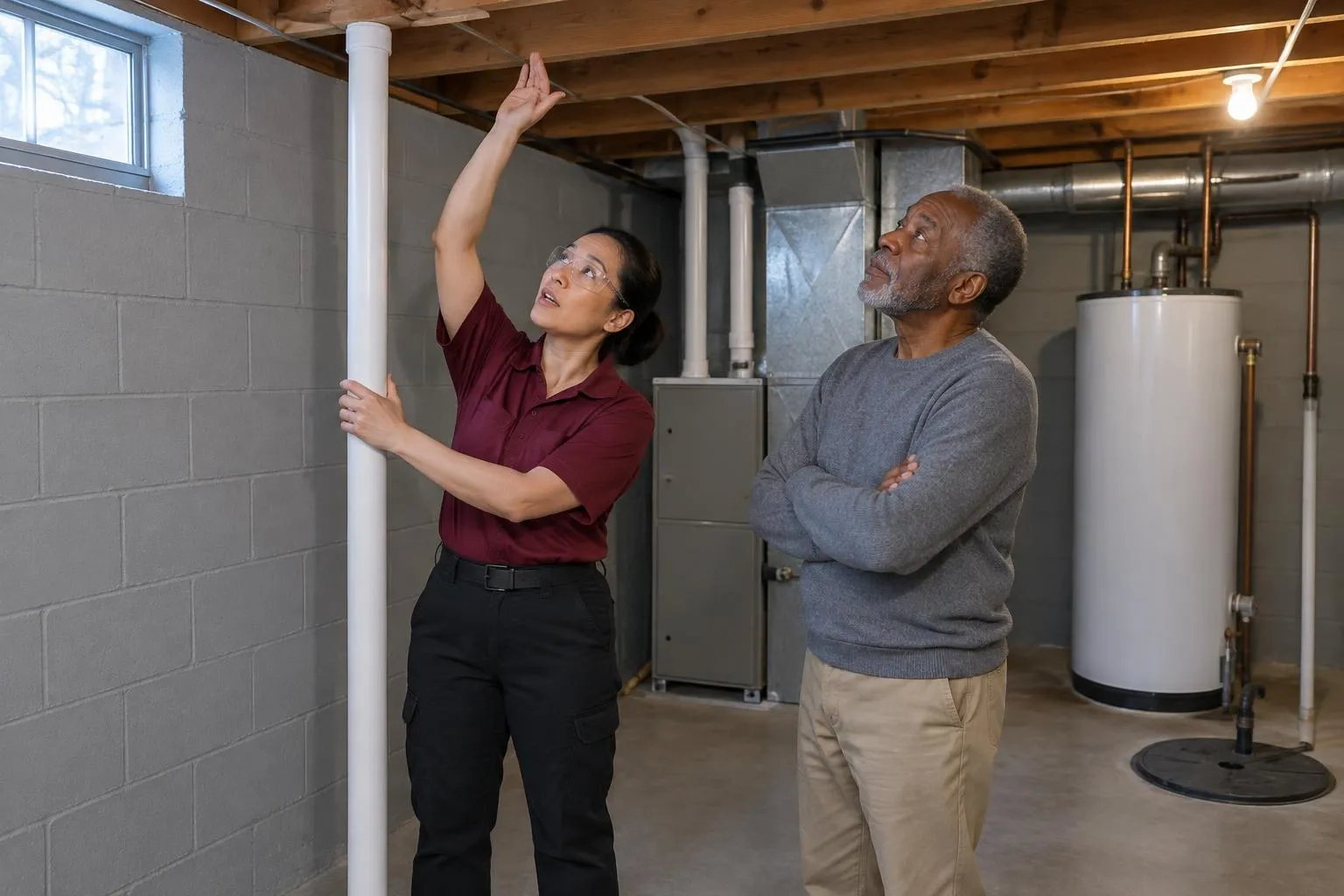
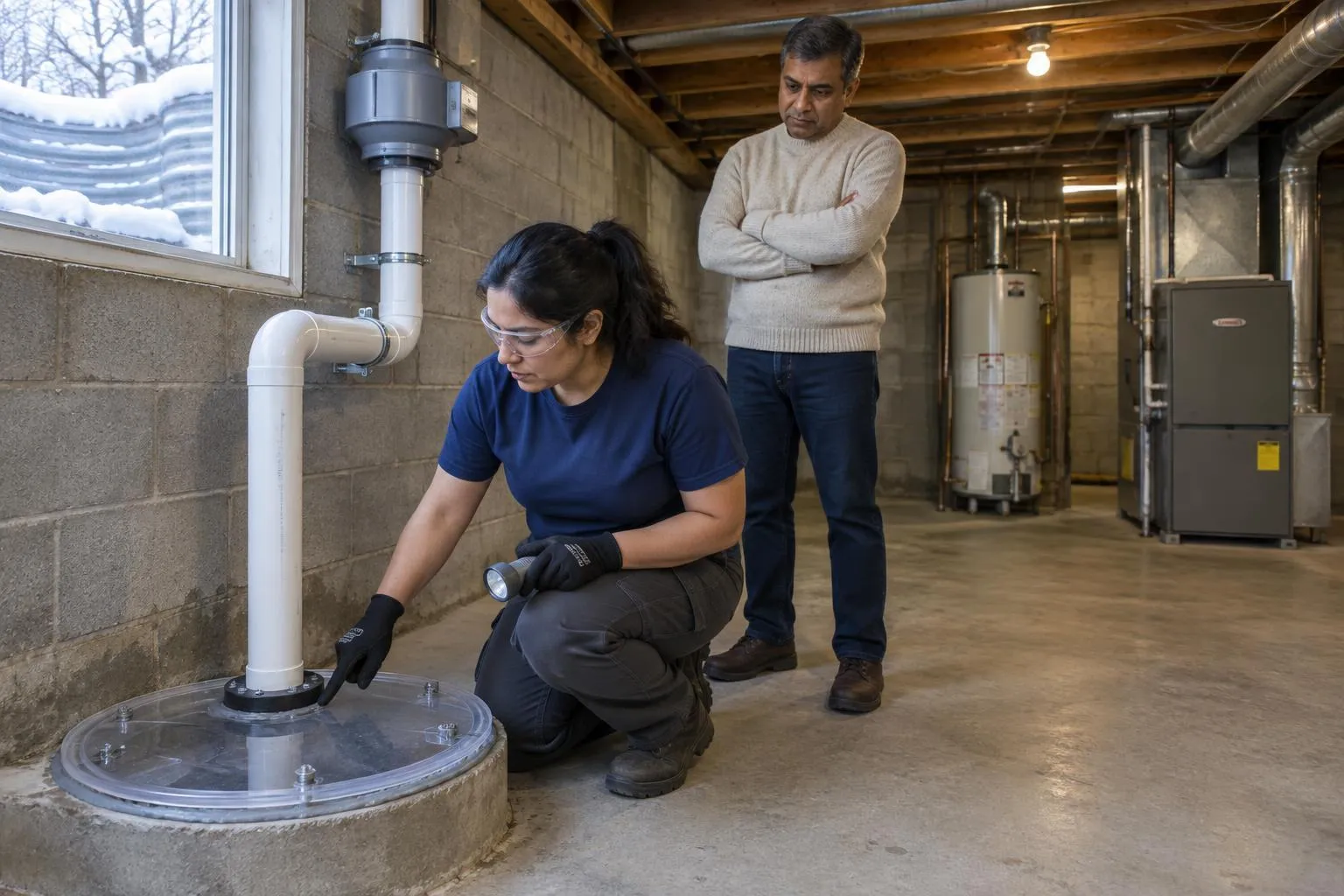
A professional contractor provides this without being asked. The scope should specify the suction point location, fan model, discharge route, and any prep work like additional sub-slab testing. If the estimate is a single line-item number with no breakdown, you don’t have a scope of work — you have a guess.
10. Will you perform diagnostic testing if the results are unexpected?
Sometimes a contractor opens up the slab and finds conditions that change the approach — no crushed rock beneath the slab, unexpected sub-slab pressure, multiple pressure zones. Good contractors run diagnostic tests when needed rather than proceeding blind. Ask how they handle surprises.
Pro Tip:Ask for a diagram of the proposed system before signing anything. A reputable contractor will sketch exactly where the suction point, fan, and PVC discharge will go. This isn’t just documentation — it helps you catch layout choices that would create aesthetic problems after the fact.
Performance Guarantees
11. What is your performance guarantee, and will you put it in writing?
The EPA action level is 4 picocuries per liter. Most professional contractors guarantee their system will bring your home below that threshold — in writing. If they won’t commit to a number, they’re hedging. A written guarantee forces accountability and gives you recourse if the system underperforms.
12. What happens if post-installation testing shows levels are still above 4 pCi/L?
This is the follow-up to question 11 that most people forget to ask. A good answer includes a specific remediation plan — adding suction points, upgrading the fan, extended monitoring — at no additional charge. “We’ll take care of it” without specifics is not a plan.
Post-Installation Testing
13. Do you provide a post-mitigation radon test?
You cannot verify a system works without a post-installation test. Some contractors include this; others charge extra; some leave it entirely to you. Know in advance. The test should happen 24 hours after the system is running under normal closed-house conditions.
14. Will the test results be documented in writing?
Pre-mitigation and post-mitigation pCi/L levels should appear in a written report you can keep. This documentation matters for future real estate transactions and for warranty claims.
References & Reputation
15. Can you provide references from past customers — specifically homes similar to mine?
A contractor who hesitates here is a contractor who’s hoping you won’t check. A confident professional has a reference list ready. Call at least two. Ask about punctuality, cleanliness, whether the system hit the promised level, and whether anything unexpected came up and how it was handled.
Practical Bottom Line
Before you hire anyone, do three things: verify their NRPP or NRSB certification on the certifying body’s website (both have contractor lookup tools), request an insurance certificate emailed to you directly, and get a written scope of work and contract before any work begins.
The research, the permits, the post-install test — none of that works as protection if the wrong person is standing in your basement with a hammer drill.
For a broader overview of how the profession works and what to expect from the full process, start with the Complete Guide to Radon Mitigation Contractors. If you’re still in the testing phase and trying to understand your numbers, the guide to interpreting radon test results will give you context before you call anyone.
The 15 questions above take about 10 minutes to ask. The alternative is finding out you hired the wrong person after they’ve already drilled your foundation.
Done reading? Get quotes from radon mitigation contractors near you.
Takes about a minute. Free, no obligation; providers reply to you directly.
Popular cities:
Nick built RadonTrust because the radon industry still mixes measurement and mitigation in ways that create conflict of interest — the same pro who tells you your level is high often wants to sell you the fix. This directory surfaces independent, credentialed professionals first.