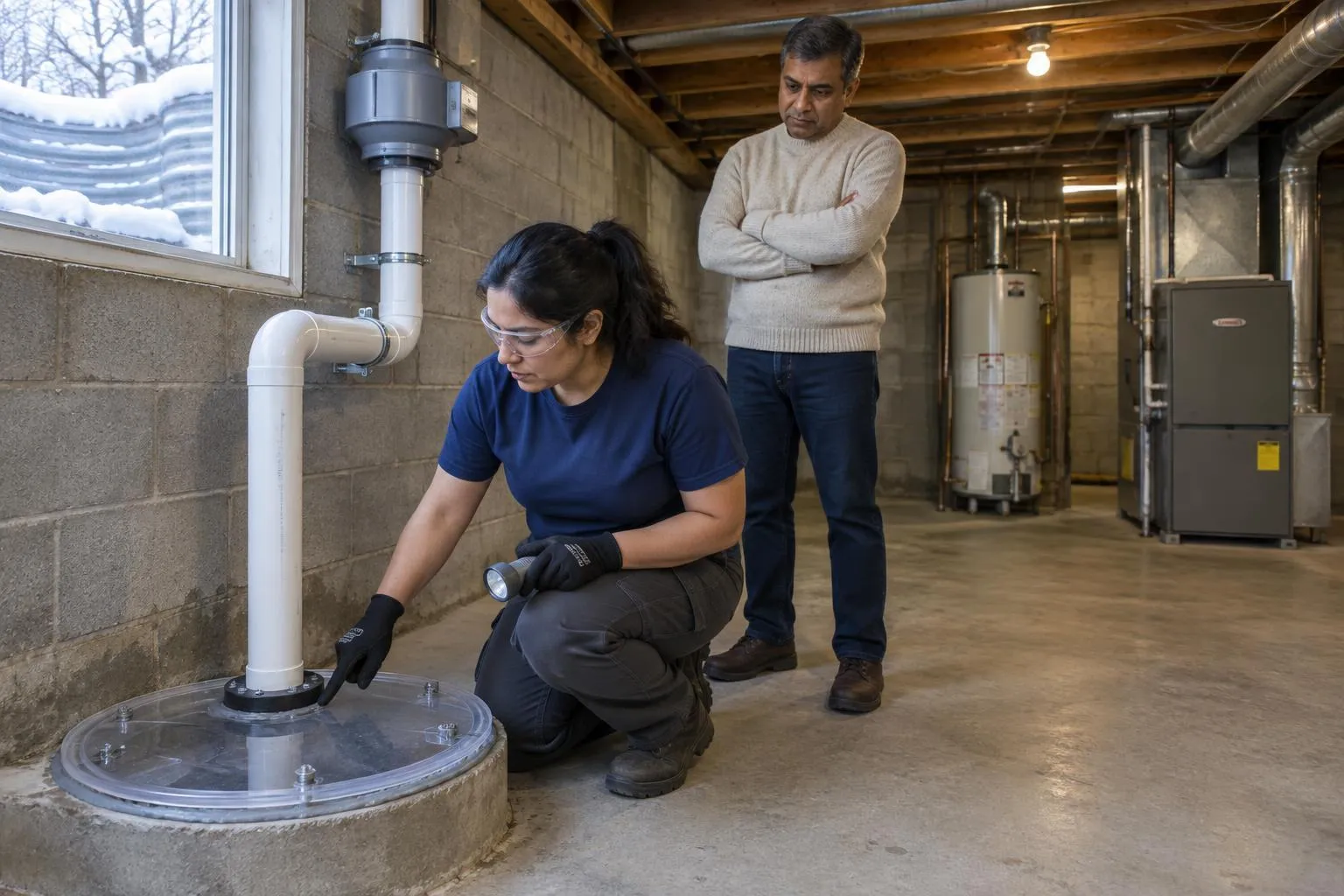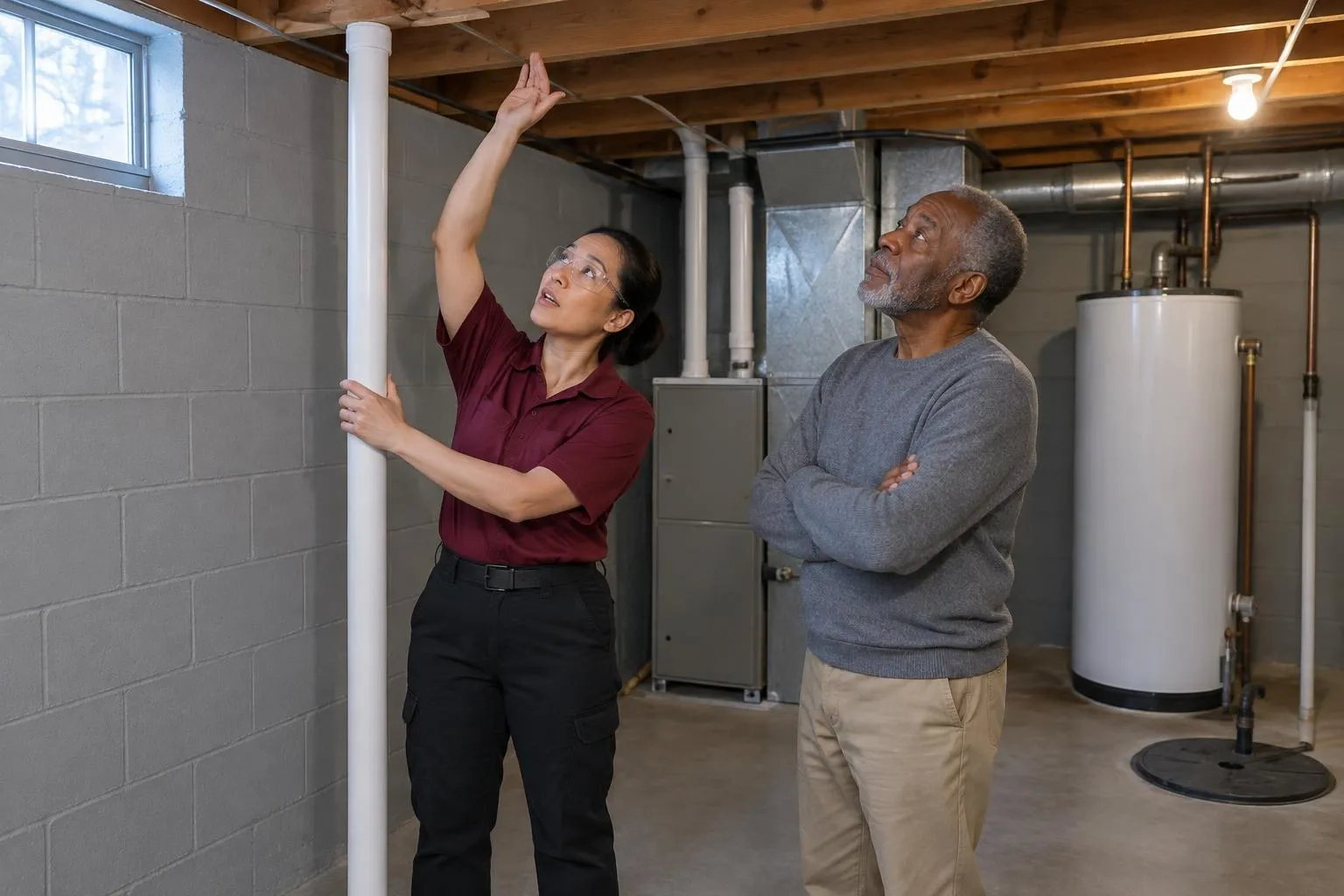
Get free quotes from radon testing and mitigation near you
Takes about a minute. Free, no obligation; providers reply to you directly.
My neighbor’s radon test came back at 11.2 pCi/L — nearly three times the EPA action level. She called the first “radon contractor” that showed up in her search results. He was there and gone in four hours, cash only, no written estimate, no follow-up test. Six months later, a re-test showed 9.4 pCi/L. Nothing had actually been fixed.
That’s the version of this story nobody puts in the brochure.
The Short Version:Hire only NRPP- or NRSB-certified contractors, get at least three written proposals, and require a post-installation test guarantee before anyone touches your house. Cheapest bid almost always means highest long-term cost.
Key Takeaways:
- Certification matters — NRPP and NRSB are the two nationally recognized credentialing bodies, and your state may require additional licensing
- Always collect three written proposals before deciding; single-day installs with no pre-assessment are a red flag
- A real contractor guarantees post-installation radon levels in writing, not just “we’ll try our best”
- Total cost of ownership beats upfront price — a cheaper install often means higher operating and maintenance costs long-term
The Certification Problem Nobody Talks About
Here’s what most guides skip: there’s no federal law requiring radon contractors to be certified. Anyone with a truck and a fan can call themselves a radon mitigator.
The two legitimate credentialing bodies are the National Radon Proficiency Program (NRPP) and the National Radon Safety Board (NRSB). Both require real training and proficiency exams — they’re not pay-to-play certificates. Note that separate credentials exist for measurement and mitigation, so a contractor certified to test isn’t automatically certified to install a system.
On top of national credentials, state rules vary wildly. Ohio routes everything through the Ohio Department of Health. New York’s Health Department keeps its own certified contractor list. The EPA recommends calling your State Radon Contact before you hire anyone — it takes five minutes and tells you exactly what’s required in your jurisdiction.
Reality Check:A contractor without NRPP or NRSB certification isn’t necessarily a scammer, but you have zero independent verification that they know what they’re doing. The certification process exists because substandard mitigation work is a documented, real problem in this industry.
Certified vs. Uncertified: What You’re Actually Comparing
| Factor | Certified (NRPP/NRSB) | Uncertified |
|---|---|---|
| Training verified | Yes — exam + continuing ed | No independent verification |
| Follows AARST/ASTM standards | Required | Unknown |
| Post-install test documentation | Standard practice | Optional / often skipped |
| State licensing compliance | Typically required | May not be checked |
| Written guarantee on radon levels | Common | Rare |
| References + before/after data | Expected | Often unavailable |
The AARST and ASTM technical standards aren’t just bureaucratic paperwork — they’re continuously updated as the industry learns more about what actually reduces radon effectively. Certified contractors are obligated to follow them. Uncertified ones aren’t obligated to follow anything.
10 Questions to Ask Before You Sign Anything
These are the questions that separate real professionals from people who watched a YouTube video and bought a fan. Ask them in writing, and pay attention to how fast they answer — hesitation is data.
- Are you currently certified by NRPP or NRSB? (Ask for the certificate number — both organizations have searchable directories)
- Do you hold the state or local license required in my area?
- Are you licensed, bonded, and insured — and can you provide documentation?
- Will you do a home inspection before giving me an estimate?
- Do you provide a free written estimate with itemized costs?
- Can I see before-and-after radon test results from previous jobs?
- Can you provide references from similar projects (same foundation type, similar square footage)?
- What’s your guarantee if post-installation levels don’t hit the target?
- What warranty does the system carry, and who services it?
- What does the work timeline look like, and who’s actually doing the installation?
Pro Tip:NRPP’s Pro Search tool (nrpp.info/pro-search) and NRSB’s “Find a Pro” directory let you verify credentials before you even make a call. Cross-reference what the contractor tells you with what the database shows.
Red Flags That Should End the Conversation
The radon industry has a straightforward villain: contractors who know just enough to sound legitimate, but not enough to actually protect you.
Walk away if any of these come up:
- No written estimate. If they won’t put it in writing, that’s not an administrative preference — it’s a liability dodge.
- Single-day install with no pre-assessment. Every home is different. A contractor who skips the diagnostic phase is guessing.
- Can’t explain how the system works. You don’t need an engineering degree to understand active soil depressurization. If they can’t explain it to you in plain language, that’s a problem.
- No references or project photos. “We do good work” is not a reference.
- No performance guarantee. The whole point is getting below 4 pCi/L. If they won’t guarantee that in writing, why are you paying them?
- Overwhelmingly busy proposal. A proposal stuffed with technical jargon and superfluous details, but vague on the actual scope of work, is designed to confuse, not inform.
I’ll be honest — the contractor who shows up fastest and quotes lowest is often the one with the least accountability. That’s not cynicism, that’s just how markets work when credentials aren’t enforced.
What Reputable Contractors Actually Do
Here’s what nobody tells you about the good ones: they slow down.
A quality radon mitigation contractor will inspect your home before quoting. They’ll assess your foundation type, identify existing ventilation, and look at your measurement history. They’ll explain why your specific house needs a specific approach — because they know that a cookie-cutter system installed in the wrong configuration can look like it’s working while barely moving the needle.
They’ll also follow up. Full-service means initial assessment, system installation, and post-installation monitoring. The work isn’t done when the fan is running — it’s done when a post-mitigation test confirms levels below 4 pCi/L.
The EPA’s guidance on radon reduction makes exactly this point: evaluate total cost of ownership, not just the upfront install. A cheaper system that runs inefficiently or needs early replacement costs more in the end. Every time.
Practical Bottom Line
If you’re hiring a radon mitigation contractor right now, here’s your three-step filter:
- Verify credentials first. Check NRPP’s Pro Search or NRSB’s directory before you call anyone. If they’re not listed, move on.
- Get three written proposals. Not three phone quotes — three written proposals with itemized scope, timeline, and system specs. Compare them line by line.
- Require a written performance guarantee. The guarantee should specify a target radon level, what happens if it’s not reached, and the warranty terms on the installed system.
You’re not buying a service — you’re buying an outcome. The outcome is a measurable, documented reduction in the radioactive gas your family is breathing.
For the full breakdown of how radon mitigation systems work and what the installation process looks like, read The Complete Guide to Radon Mitigation Contractors. If you’re in the middle of a real estate transaction with a radon contingency, the timing and negotiation dynamics are different — that’s covered separately in the hiring cluster.
The contractor who’s worth hiring won’t mind you asking all ten questions. The one who bristles at them just told you everything you need to know.
Done reading? Get quotes from radon mitigation contractors near you.
Takes about a minute. Free, no obligation; providers reply to you directly.
Popular cities:
Nick built RadonTrust because the radon industry still mixes measurement and mitigation in ways that create conflict of interest — the same pro who tells you your level is high often wants to sell you the fix. This directory surfaces independent, credentialed professionals first.