Get free quotes from radon testing and mitigation in New York
Takes about a minute. Free, no obligation; providers reply to you directly.
A homeowner I know in Albany got the test kit from her real estate agent, stuck it in the basement, mailed it off, and forgot about it for three weeks. The results came back at 6.2 pCi/L — well above the EPA’s 4.0 action level. The seller’s contractor quote was $800. Her inspector said it should be $1,400. Her brother-in-law said “just open a window.” She closed anyway without mitigation and spent the next year second-guessing every decision.
That’s the radon problem in New York in miniature: plenty of certified contractors, plenty of conflicting advice, and no obvious way to tell who’s actually qualified versus who just bought a domain name.
The Short Version:New York has 80 certified radon contractors statewide — but quality varies enormously by region. Testing runs $125–$400 for most homes (up to $700 for large/multi-story). Look for RMS or NRPP certification and at minimum 2–3 years of local reviews. For most upstate homeowners, John Betlem or Woodford Bros. are the safest bets; NYC/Tristate should look at Protect Environmental.
Key Takeaways
- New York has 80 state-certified radon contractors — certification (RMS or state-licensed NY mitigation) is non-negotiable, not a bonus
- Testing costs $125–$400 for standard homes; large or multi-story properties can hit $700 using electret ion detectors
- Most reputable contractors offer free estimates — if someone charges just to come out and quote, keep dialing
- Post-mitigation retesting every 2 years is standard practice, not upselling — systems degrade and radon pathways shift
What Makes New York Complicated
Here’s what most people miss: New York isn’t one radon market — it’s five or six, stitched together by geography. The Capital Region and Hudson Valley have different geology than Upstate (Rochester, Binghamton, Syracuse). NYC and the Tristate metro have their own dynamics entirely, with urban row houses, co-ops, and high-rises creating mitigation challenges that don’t exist in suburban basements.
The EPA’s Zone 1 designation (highest radon potential) covers significant chunks of upstate and central New York. That means contractors in those regions have more collective experience — and more competition keeping prices honest. In the five boroughs and Westchester, you’re dealing with fewer specialists, denser housing stock, and sometimes a significant premium.
Reality Check:A “5-star rated” contractor with 4 reviews is not the same as a 4.9-star contractor with 2,800 reviews. Volume of reviews matters enormously in this business — it signals years of repeat work, not a friend group getting them over the threshold.
The Contractors Worth Knowing
New York’s certified contractor ecosystem has a few names that stand out based on review volume, certification status, and regional track record.
| Contractor | Region | Rating | Reviews | Certification |
|---|---|---|---|---|
| John Betlem Heating & Cooling | Rochester | 4.9/5 | 2,815 | State-licensed NY mitigation |
| Woodford Bros., Inc. | Binghamton/Upstate | 4.8/5 | 1,451 | Certified RMS + NY mitigation |
| Poughkeepsie Environmental | Hudson Valley/Dutchess | N/A | — | 2,000+ systems installed |
| Protect Environmental | New York City | N/A | — | NYC specialist |
| Radon Technologies | Albany | 4.3/5 | 15 | Certified RMS |
| Binghamton Environmental Group | Binghamton | 5.0/5 | 5 | State-licensed NY mitigation |
John Betlem’s 2,815 reviews aren’t just impressive — they represent nearly two decades of consistent service across the Rochester metro. That’s the kind of track record that matters when someone is drilling through your foundation slab and running PVC up through your living space.
Woodford Bros. covers a wide swath of upstate (Binghamton, Syracuse, Utica, Rochester, Rome) and leads with free in-home consultations. Their framing is blunt in a way I appreciate: “Don’t wait to make your home safer.” No manufactured urgency — just a realistic acknowledgment that radon isn’t going to fix itself.
For the Hudson Valley and Dutchess County corridor, Poughkeepsie Environmental’s 20-year, 2,000+ system track record is the kind of local density that matters. These aren’t contractors who drove two hours to install your system and won’t be reachable for follow-up.
Pro Tip:Always ask for pre- and post-mitigation pCi/L readings in writing. A good contractor documents both — the baseline and the post-install verification test result. If they’re reluctant to provide that documentation, that tells you something.
What You’re Actually Paying For
The $125–$400 testing range is real, but it comes with an asterisk. That lower end typically covers a standard single-family home with a basement and one test location. If you have a multi-story home, a finished basement, a crawl space, or any combination of the above — you’re looking at multiple electret ion detectors and a fee that can reach $700.
Nobody tells you this until you’re already scheduled.
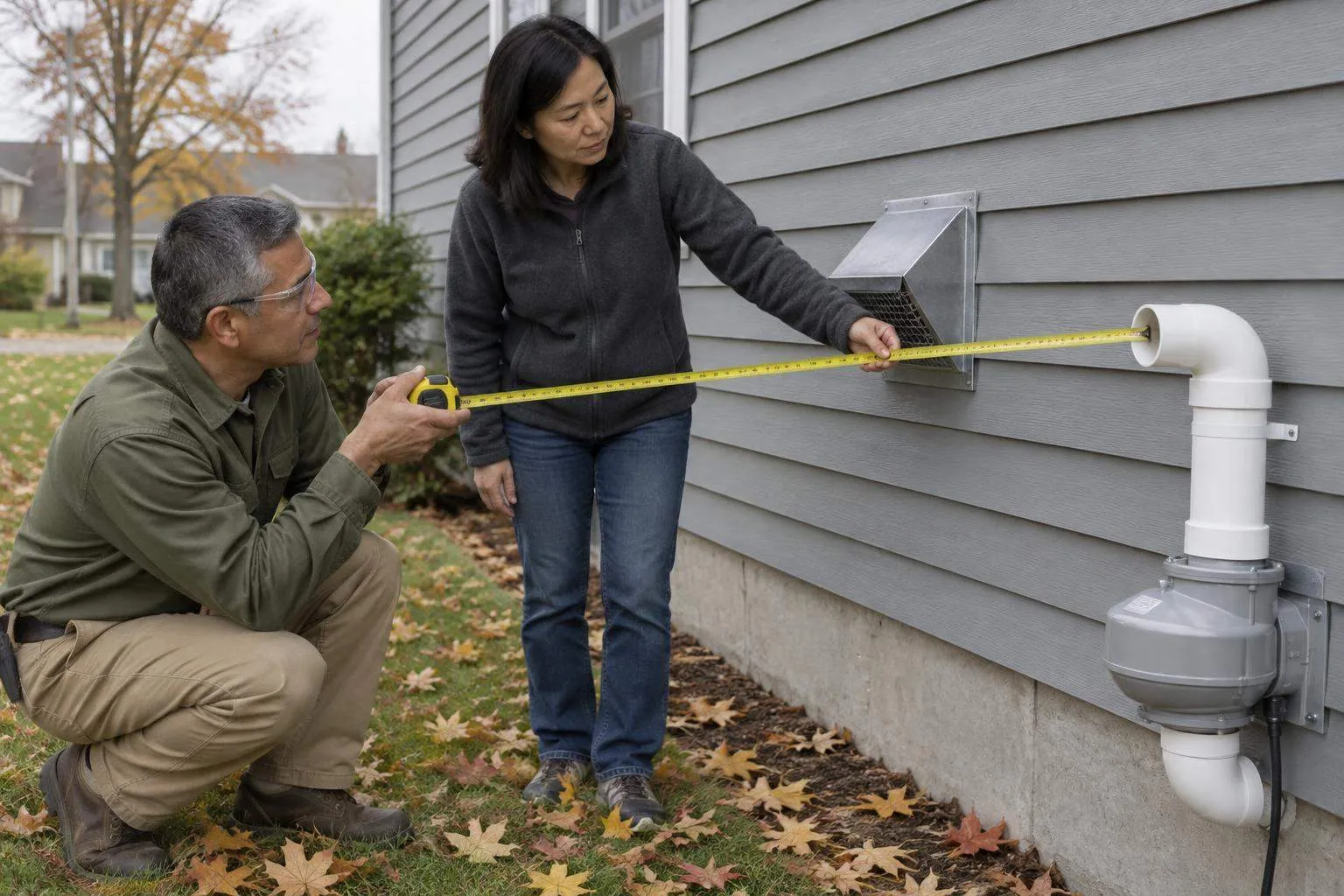
The mitigation installation itself isn’t priced in the research data because it varies significantly by home type, foundation design, and radon entry point. Active soil depressurization (the most common fix — a pipe from below your slab to above your roofline, with a fan creating negative pressure) runs differently for a poured concrete basement versus a block-wall foundation versus a crawl space. Get three quotes. They should all be in the same ballpark; outliers in either direction deserve scrutiny.
Most reputable contractors in New York — including Woodford Bros. and National Radon Defense affiliates — offer free inspections and consultations for qualifying radon levels. If you’ve already got a test result above 4 pCi/L, any serious contractor will come out without charging you just to look.
The Two Things That Trip Homeowners Up
The real estate timeline. Radon discoveries during home purchase negotiations create artificial urgency. Sellers want the cheapest contractor who can install before closing. Buyers want the most thorough one. I’ll be honest — the number of mitigation systems installed by whoever the seller’s agent has on speed-dial, without the buyer verifying credentials, is higher than anyone in this industry likes to admit. If you’re in a transaction, hire your own inspector separately from whoever the listing agent recommends.
Skipping the post-installation test. The mitigation system goes in. The fan hums. Everyone exhales. And then… nothing. No follow-up test, no verification, no documentation. The EPA and every credentialed contractor will tell you to retest 24 hours after installation, then again at 2 years, and every 2 years after that. Systems have fans that fail. Radon pathways shift as foundations settle. The biennial retest isn’t bureaucratic box-checking — it’s how you know the system is still working.
Finding Verified Contractors in Your Area
New York’s directory of certified contractors is searchable through state licensing databases, but the fastest way to find verified, reviewed local pros is through a specialized directory. The New York radon mitigation directory filters by certification status and shows real review data — not just whoever paid for placement.
For deeper context on what to expect from the hiring process, credentials to verify, and how mitigation systems actually work, the complete guide to radon mitigation contractors covers the full picture.
Practical Bottom Line
- Test first if you haven’t — $125–$400 is cheap relative to what you’re protecting against. Use a certified RMP, not a hardware store kit, if you’re in a real estate transaction.
- Verify credentials before you call — look for RMS, NRPP, or state-licensed NY mitigation. These aren’t interchangeable, and not every contractor on Angi has them.
- Get the free consultation — Woodford Bros., National Radon Defense affiliates, and most established upstate contractors will come out at no charge if your levels are elevated.
- Ask for the post-install test in writing — documentation of pre- and post-mitigation pCi/L levels is the only way to know the system did its job.
- Set a calendar reminder for two years out — biennial retesting isn’t optional if you want to stay confident the system is working.
Radon isn’t complicated. The fix works. The contractors exist. The part that trips people up is the hiring process — and now you have the receipts.
Done reading? Get quotes from radon mitigation contractors in New York.
Takes about a minute. Free, no obligation; providers reply to you directly.
Popular cities:
Nick built RadonTrust because the radon industry still mixes measurement and mitigation in ways that create conflict of interest — the same pro who tells you your level is high often wants to sell you the fix. This directory surfaces independent, credentialed professionals first.