Get free quotes from radon testing and mitigation near you
Takes about a minute. Free, no obligation; providers reply to you directly.
My neighbor ran her own radon test last spring — a $15 charcoal kit from the hardware store. It came back at 3.8 pCi/L. She breathed a sigh of relief, filed the paper away, and didn’t think about it again. A year later, during a home sale, the buyer’s inspector ran a professional active test in the same basement. The reading: 6.2 pCi/L. Same house. Same room. Very different answer.
That gap — 3.8 versus 6.2 — is the entire conversation.
The Short Version: A radon testing service tells you if you have a problem. A radon mitigation contractor fixes it. For most homeowners, you’ll need both — but not always from the same company, and definitely not at the same time. If your reading is above 4 pCi/L, testing alone won’t protect you.
category: “Comparison”
Key Takeaways
- The EPA action level is 4 pCi/L — above that, mitigation isn’t optional, it’s urgent.
- Professional testing ($100–$300) costs more than DIY kits ($10–$80) but uses active equipment that catches what passive kits miss.
- Mitigation runs $800–$2,500 depending on your foundation type and home size — and requires a retest afterward.
- Some contractors do both testing and mitigation; others specialize. Each has trade-offs worth understanding.
Two Different Jobs, Constantly Confused
Here’s the confusion: radon mitigation contractors and radon testing services sound like they do the same thing. They don’t.
A radon testing service measures what’s in your air. They come in, set up active monitoring equipment (or interpret passive kits), wait the required time, and give you a number. That’s the whole job.
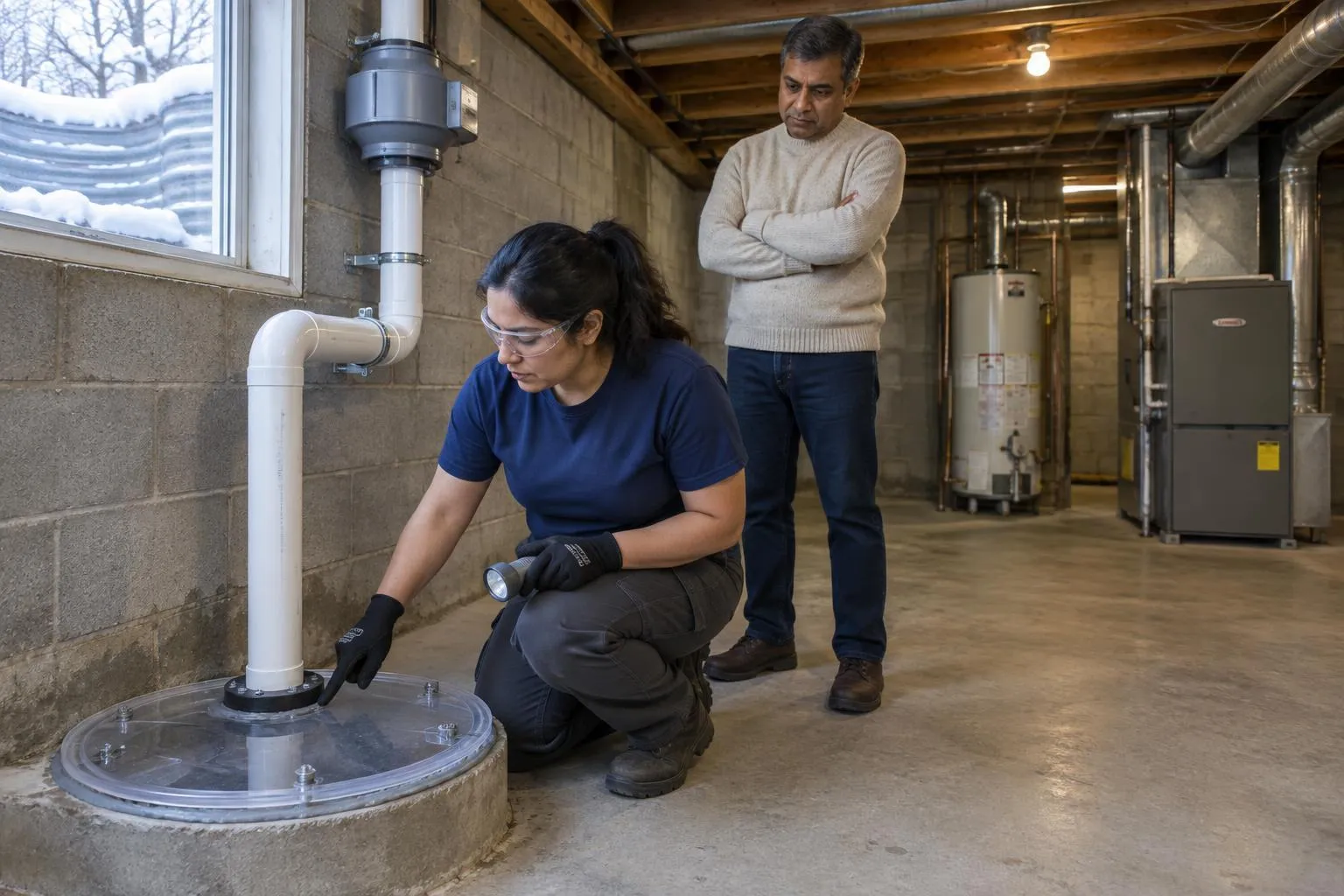
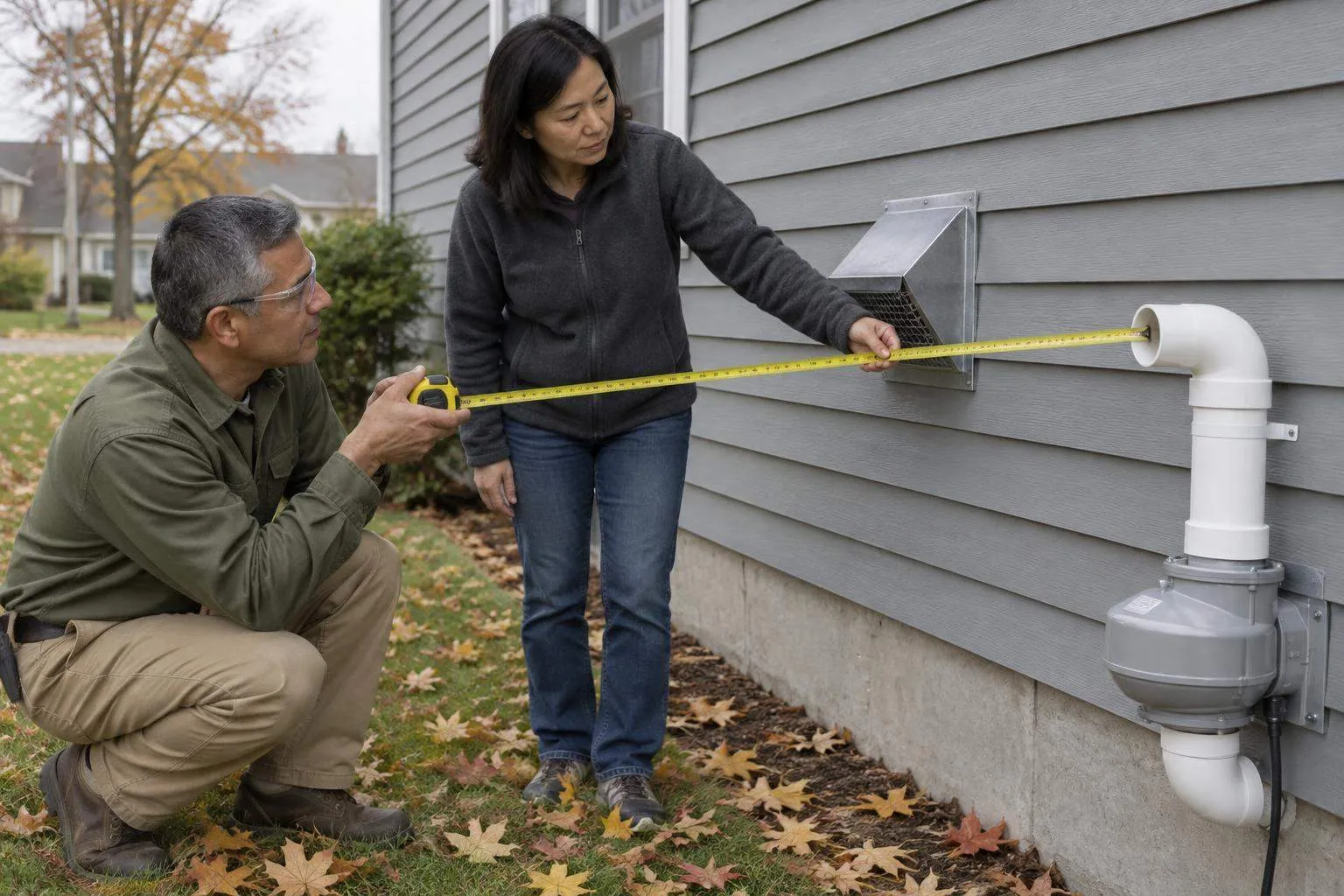
A radon mitigation contractor is an installer. They design and build the system — typically sub-slab depressurization, which pipes radon from beneath your foundation up through the structure and out above the roofline — that pulls the gas out before you breathe it. They don’t test your air on the way in; they test it on the way out to confirm the fix worked.
Nobody tells you this clearly until you’ve already made a phone call expecting one thing and gotten a quote for something else entirely.
The Real Difference: Certifications Aren’t the Same
This is where it gets granular, and it matters.
The NRPP (National Radon Proficiency Program) and NRSB (National Radon Safety Board) both certify radon professionals — but measurement and mitigation are separate credentials. A contractor certified to install systems isn’t automatically certified to do your initial test, and vice versa.
About half of states (including Illinois, New Jersey, and New York) require state licensing on top of those national credentials. There’s no federal radon contractor license. If your state requires one, a contractor without it is operating illegally — and your results or warranty may be meaningless for real estate purposes.
Pro Tip:Before you hire anyone, ask two questions: “Are you NEHA-NRPP or NRSB certified for what you’re doing?” and “Does my state require a separate license?” If they hesitate on either, keep looking.
DIY Testing: When It Works and When It Doesn’t
I’ll be honest — a $15 charcoal kit works fine as a first screen. If you’re curious about your basement and your area isn’t high-radon, a passive kit gives you a baseline. That’s legitimate.
What it doesn’t give you: precision. Passive kits (charcoal, electret, alpha track) are sensitive to placement, open windows, weather swings, and lab turnaround time. The professional alternative — an active continuous monitor — logs readings hourly, flags anomalies, and gives you results same day. That’s not a marketing claim; it’s the reason real estate transactions almost always require professional testing, not a hardware store kit.
The math is uncomfortable but simple: a $45 DIY kit that returns a false negative costs you years of elevated radon exposure. A $150 professional test that catches a 5.8 pCi/L level costs you $150.
Side-by-Side: What You’re Actually Comparing
| Factor | DIY Test Kit | Professional Testing Service | Mitigation Contractor |
|---|---|---|---|
| Cost | $10–$80 | $100–$300 | $800–$2,500 |
| Turnaround | Days to weeks (lab) | Same day to 7 days | Install + 24-hr retest |
| Accuracy | Moderate (passive tech) | High (active monitors) | N/A — installs, doesn’t test |
| Good for real estate? | Often rejected | Yes, with documentation | Required after mitigation |
| Gives you a fix? | No | No | Yes |
| Certification needed? | No | Yes (NRPP/NRSB) | Yes (NRPP/NRSB, often state) |
| Post-result guidance | None | Sometimes | Full mitigation plan + warranty |
The column that catches people off guard: mitigation contractors don’t test your air before they arrive. You’re expected to bring a test result to that conversation. If you call a mitigation company first, a good one will tell you to get a test result first. A less good one will just schedule the install anyway and hope for upsell.
When Do You Need Both?
Almost always — in sequence.
Step 1: Test. Either DIY (if it’s a casual screen) or professional (if you’re buying/selling, in a high-radon zone, or your DIY came back borderline). Short-term tests take 2–7 days; long-term tests run 90+ days for the most accurate annual average.
Step 2: Act on the result. Below 2 pCi/L, you’re fine — retest in a few years. Between 2–4 pCi/L, EPA says consider mitigation; most professionals say get a long-term test to confirm. Above 4 pCi/L, hire a mitigation contractor. This is not a “wait and see.”
Step 3: Retest after mitigation. This is non-negotiable. Every reputable mitigation contractor installs a system and then verifies it brought your levels below 4 pCi/L. If they’re not offering a post-installation test, that’s a red flag.
Reality Check:A radon mitigation system installed without a follow-up test is like surgery with no post-op checkup. The system might be working great — or it might have a design flaw and you’d have no idea. Always get the retest. Always get documentation.
The Bundled Service Question
Some contractors offer both testing and mitigation. This is convenient, but it creates one structural conflict of interest: the company testing your home also profits from finding a problem. That’s not an accusation — most legitimate firms are scrupulous — but it’s worth knowing.
The cleanest setup: hire an independent testing service first. Get a result you can trust. Then, if mitigation is needed, hire a mitigation contractor. You can also ask the mitigation contractor to do the post-installation test, which is lower-stakes since the system is already in.
If you do go with a bundled provider, ask them upfront: “Do you offer a discount on mitigation if I test with you first?” Many do. Just make sure their tester holds measurement certification separately from their installer’s mitigation certification.
Practical Bottom Line
Here’s what actually matters:
- Don’t skip the test. Radon causes ~21,000 lung cancer deaths per year in the US — second only to smoking. A $100 professional test is the cheapest form of insurance you’ll buy this year.
- Above 4 pCi/L, call a mitigation contractor. Not a testing service. Not your HVAC company. A certified mitigation contractor.
- Verify credentials. NRPP or NRSB for both testers and installers. Check your state’s requirements.
- Demand the post-installation retest. Get the documentation. You’ll need it for your next real estate transaction.
- Budget realistically. Testing + mitigation in a worst-case scenario runs $250–$350 for a professional test plus $800–$2,500 for the system. That’s $1,050–$2,850 total — for a home you’re going to live in for decades.
For a complete breakdown of what to look for in a mitigation contractor, how to vet credentials, and what the installation process actually looks like, read our Complete Guide to Radon Mitigation Contractors.
The test result is just a number. What you do with it is everything.
Done reading? Get quotes from radon mitigation contractors near you.
Takes about a minute. Free, no obligation; providers reply to you directly.
Popular cities:
Nick built RadonTrust because the radon industry still mixes measurement and mitigation in ways that create conflict of interest — the same pro who tells you your level is high often wants to sell you the fix. This directory surfaces independent, credentialed professionals first.