Get free quotes from radon testing and mitigation near you
Takes about a minute. Free, no obligation; providers reply to you directly.
A homeowner called me out of the blue once to ask if they should trust a radon test from someone they found on Craigslist. The guy had shown up, placed a canister in the basement, and charged $80. No paperwork, no follow-up report, no mention of what lab would analyze it. Just a guy with a jar and Venmo.
That story isn’t unusual. The radon testing market has a real credential problem — not because certifications don’t exist, but because most homeowners have no idea what to look for, and a surprising number of “radon professionals” are happy to let that ignorance do the work for them.
NRPP certification is the industry’s answer. Whether it’s the right answer depends on what you’re actually trying to accomplish.
The Short Version:NRPP certification (Radon Measurement Professional) is the most widely recognized credential in the industry, EPA-recognized, and backed by ISO 17024 accreditation. It matters most for real-estate transactions and high-stakes testing. It doesn’t automatically mean the person holding it is good at their job — but it’s the best filter most homeowners have. For mitigation work, there’s a separate credential.
Key Takeaways
- NRPP has issued credentials since 1998 and is accredited under ISO 17024 — the same standard used to accredit medical labs
- There are over 3,000 certified professionals nationwide, but the credential splits into two tracks: measurement vs. mitigation
- Certifications run $250–$325 for a two-year term and require 12 hours of continuing education to renew
- Certification proves baseline competency. It doesn’t prove the contractor is thorough, honest, or good at client communication
What NRPP Actually Is
The National Radon Proficiency Program is run by AARST-NRPP (American Association of Radon Scientists and Technologists). It’s been credentialing radon professionals since 1998, and it holds ANAB accreditation under ANSI/ISO/IEC 17024 — which is a legitimately rigorous standard, the same framework used for professional certification programs in healthcare and engineering.
The EPA recognizes NRPP credentials. Multiple state agencies mandate NRPP or its competitor (NRSB) as a prerequisite for operating legally. That’s not marketing — that’s the federal government and state regulators saying this credential means something.
Here’s what most people miss: the measurement credential and the mitigation credential are separate. A Radon Measurement Professional (RMP) is certified to test your home. A Radon Mitigation Professional has a different exam and different requirements. Plenty of contractors hold both — but don’t assume.
The Credential Breakdown
There are actually three tiers on the measurement side:
| Credential | Fee (2-year) | What It Covers |
|---|---|---|
| Radon Measurement Field Technician | $250 | Entry-level; must work under a certified RMP |
| RMP – Standard Services | $275 | Passive devices (charcoal canisters, e-perms) |
| RMP – Analytical Services | $325 | Active devices (continuous radon monitors); requires device performance testing + annual calibration |
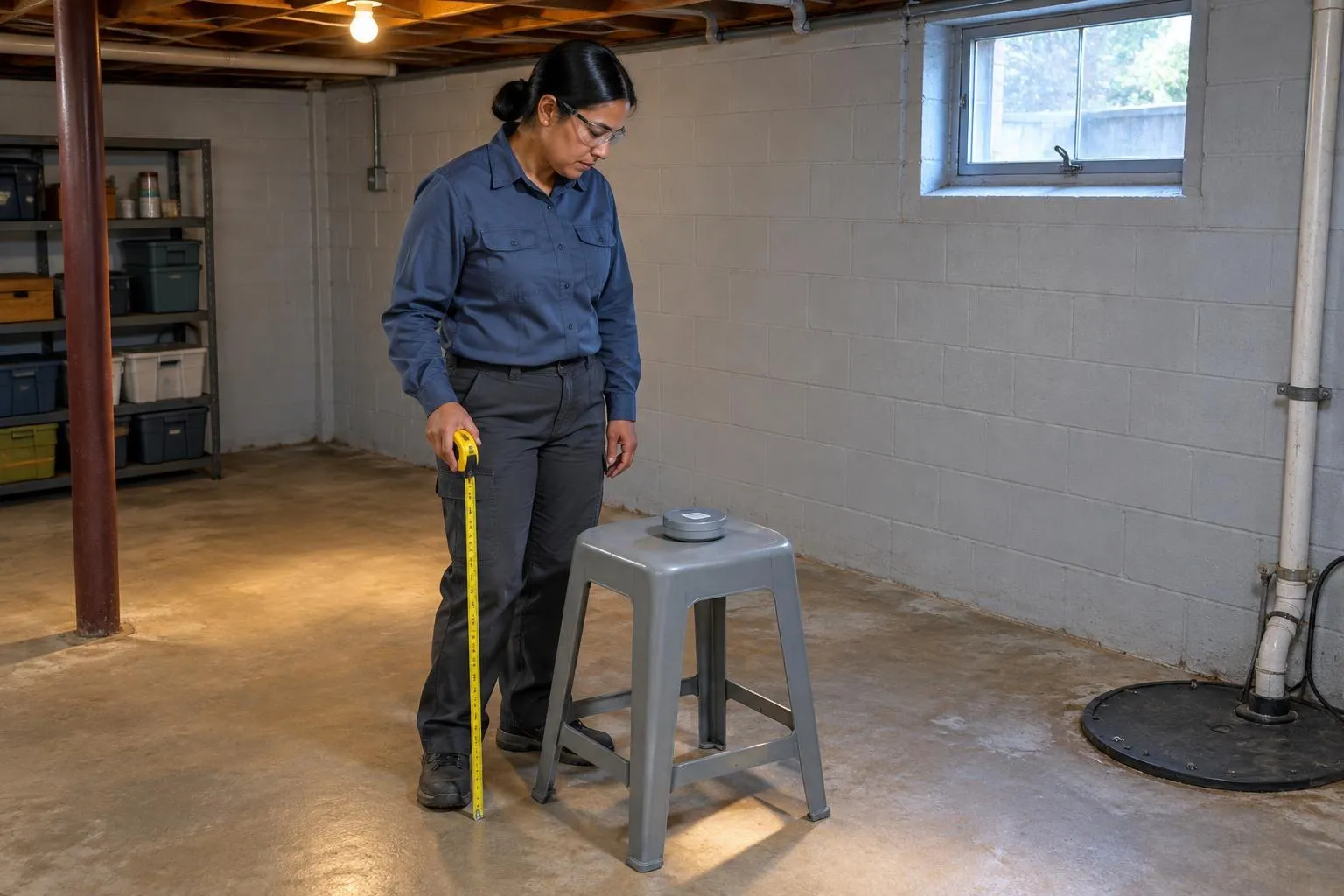
The “Analytical Services” tier is the higher bar. Continuous radon monitors give you hour-by-hour data — useful for understanding patterns, not just averages. But they require more from the professional: registered NRPP-approved devices, biennial performance testing at approved chambers, and annual calibration documentation.
Reality Check:A Field Technician cannot sign off on your report independently. If you’re hiring someone for a real-estate transaction and the “certified professional” turns out to be a Field Tech working alone, that’s a problem. Ask specifically: are you a certified Radon Measurement Professional, or a Field Technician?
How You Actually Get It
To earn RMP certification, a professional must:
- Complete a 16-hour NRPP-approved initial course (valid for two years)
- Pass the NRPP Measurement Exam via PSI testing centers
- Register all devices with NRPP (analytical devices require calibration proof upfront)
- Agree to follow ANSI/AARST standards for QA/QC, documentation, and ethics
Two years later, they renew with 12 hours of continuing education and pay another $275–$325.
That’s not trivial, but it’s not a gauntlet either. The training floor is 16 hours — which is about two full workdays. Someone can be certified and have done relatively few real-world tests.
Pro Tip:Ask your contractor how many tests they’ve completed in the past 12 months. Certification shows they passed a course and an exam. Volume shows they’re actually doing the work. A contractor who runs 200 tests a year will catch protocol errors that someone doing 10 tests a year might miss.
NRPP vs. NRSB: The Competitor
NRSB (National Radon Safety Board) is NRPP’s main competitor. Both are EPA-recognized. Here’s the practical difference most people ignore:
| Factor | NRPP | NRSB |
|---|---|---|
| Exam delivery | PSI testing centers (nationwide) | Requires approved proctor |
| Cost (2-year) | $275–$325 | ~$200 for RMS |
| CE requirement | 12 hrs/2 years | 4 hrs/year for technicians |
| State recognition | Broader | Narrower in some states |
NRPP has the edge on exam accessibility (PSI is everywhere) and state-level recognition. NRSB is slightly cheaper. If you’re evaluating a contractor who holds NRSB, that’s not a red flag — but confirm your state accepts it.
When State Licensing Overrides Everything
Here’s where it gets complicated. Many states layer their own requirements on top of NRPP certification. Kansas, for example, recognizes NRPP as a prerequisite but requires the initial course be completed within 12 months of application — and charges separate fees per device type ($150 base + $75 per additional device).
Some states are stricter than NRPP. A few are more permissive. A handful have no state program at all, which means NRPP is your only meaningful signal.
Before you hire anyone, look up your state’s radon program. EPA maintains a list. If your state has its own licensing board, verify the contractor there — not just on the NRPP lookup tool.
When Certification Actually Matters
Real-estate transactions. This is where certification is non-negotiable. Buyers, sellers, and lenders want a defensible result from a credentialed professional. An uncertified test can derail a closing.
Post-mitigation verification. After a mitigation system is installed, a follow-up test confirms it’s working. That test should be run by a certified professional — ideally someone different from the contractor who installed the system.
EPA Zone 1 areas. If you’re in a high-risk zone, use a credentialed pro from the start. DIY charcoal kits are fine for a preliminary read, but elevated results (above 4 pCi/L) warrant a professional confirmation.
When It’s Overkill
If you’re testing a vacation cabin in a low-risk area out of curiosity, a $30 DIY charcoal kit from the hardware store sent to a certified lab is a perfectly reasonable starting point. You don’t need to hire an RMP to run a screening test.
Certification matters most when the stakes involve money (real estate), health decisions (elevated results requiring mitigation), or legal documentation.
Practical Bottom Line
If you’re hiring a radon testing professional, here’s the checklist:
- Look them up on the NRPP verification tool — don’t take their word for it
- Confirm the tier — RMP, not just Field Technician
- Ask about their device — passive canister or continuous monitor? For anything beyond a routine screening, continuous monitors give more useful data
- Check your state’s program — NRPP is the floor, not always the ceiling
- Ask for their last 12 months of test volume — experience matters as much as the credential
The certification tells you someone sat through 16 hours of training and passed an exam. It doesn’t tell you they’re meticulous, well-equipped, or honest with clients. Use it as a filter, not a guarantee.
For more on what happens after the test comes back elevated, start with The Complete Guide to Radon Mitigation Contractors.
Done reading? Get quotes from radon mitigation contractors near you.
Takes about a minute. Free, no obligation; providers reply to you directly.
Popular cities:
Nick built RadonTrust because the radon industry still mixes measurement and mitigation in ways that create conflict of interest — the same pro who tells you your level is high often wants to sell you the fix. This directory surfaces independent, credentialed professionals first.